Learning Experience Platforms
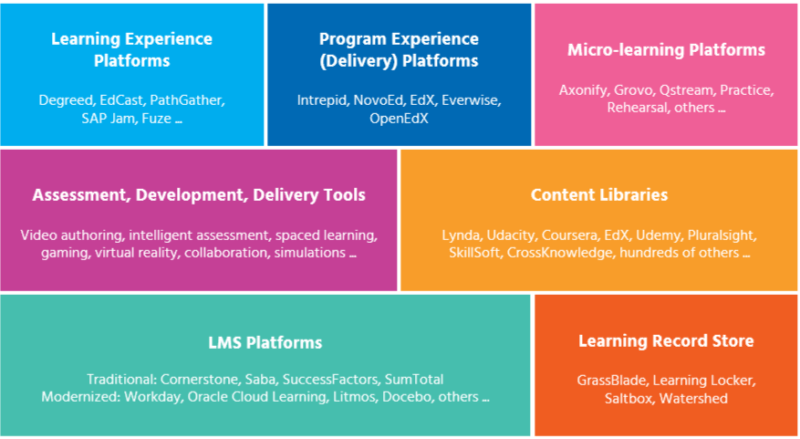
What is a Learning Experience Platform (LXP)
Definition and core components
A Learning Experience Platform (LXP) is a learner-centric software layer designed to surface, curate, and personalize learning content from multiple sources. Unlike traditional systems that emphasize course catalog management, an LXP focuses on the learner’s journey, skills development, and practical application. Core components typically include intelligent discovery, personalized recommendations, social features, content curation, and analytics that translate usage into actionable learning paths.
- Personalization engines that tailor content to an individual’s goals and prior activity.
- Content discovery and aggregation across internal and external sources.
- Social learning features such as communities, peer recommendations, and collaborative spaces.
- Curation capabilities to organize, annotate, and pair content with skills frameworks.
- Analytics and reporting to track progress, competencies, and impact.
LXP vs LMS: Key differences and use cases
LXPs and LMSs serve related but distinct purposes. An LMS is typically content- and compliance-focused, delivering structured courses, tracking completions, and enforcing governance. An LXP emphasizes learner agency, informal learning, and skill-based outcomes, often integrating content from multiple sources and enabling discovery-driven journeys. In practice, organizations use LXPs for employee development, upskilling, and social learning, while an LMS handles mandatory training, certifications, and regulatory requirements.
Key differences include user experience, content governance, and how success is measured. LXPs prioritize relevance, personalization, and community-driven learning, with use cases such as job-ready skill building and continuous education. LMS platforms often excel in policy adherence, audit trails, and formal assessment, with use cases like compliance training and credential tracking.
Core Features of LXPs
Personalization and AI-driven recommendations
Personalization is at the heart of modern LXPs. By building user profiles from behavior, role, and goals, LXPs surface relevant courses, articles, videos, and microlearning nudges. AI-driven recommendations adapt as learners progress, identifying skill gaps and suggesting pathways that align with career objectives. Privacy, data governance, and transparency about how recommendations are generated are essential to maintain trust.
Social learning and collaboration
Social features turn learning into a collaborative process. Learners share resources, participate in discussion threads, tag content, and co-create learning lists. Groups, mentors, and peer reviews help embed knowledge in practical work, while social signals—likes, comments, and shares—improve content quality and relevance over time.
Content curation and microlearning
Effective LXPs curate content from a mixture of internal repositories and external providers. Curation enables tagging, prioritization, and sequencing around specific skills. Microlearning supports just-in-time knowledge, with short, accessible lessons that fit into busy days. This combination helps learners build competencies through steady, digestible increments.
Analytics and insights
Analytics translate usage into insight. Dashboards track engagement, progression, and completion, while skills mappings reveal how learning aligns with job requirements. Insights support ongoing improvements in content strategy, learner personas, and ROI discussions with business leaders.
Buyer Personas and Use Cases
Corporate training
In corporate settings, an LXP accelerates onboarding, upskills teams, and supports continuous development. HR and L&D teams leverage personalization to recommend role-specific learning paths, while managers monitor progress and tie learning to performance outcomes. The focus is on practical application, time-to-competence, and measurable impact on business metrics.
Higher education and lifelong learning
Higher education institutions use LXPs to complement formal curricula with elective content, microcredentials, and industry-aligned learning experiences. Lifelong learners benefit from flexible pathways, social learning, and access to a broad range of resources beyond a single campus or platform. The goal is to sustain engagement and keep skills current in a rapidly changing landscape.
Compliance and skilling
Regulatory environments demand auditable, scalable training. LXPs can centralize compliance learning, integrate policy updates, and automate nudges for recertification. By aligning microlearning with regulatory requirements, organizations reduce risk while maintaining an engaging learning experience for employees.
Implementation Best Practices
Data integration and interoperability
Successful LXP implementations depend on clean data and seamless integrations. Connect the LXP to HRIS, LMS, content repositories, and identity providers via standard APIs. Prioritize single sign-on, data quality controls, and a clearly defined data model so that learning activities map to roles, competencies, and business outcomes.
Content strategy and governance
Prepare a governance framework that defines taxonomy, metadata standards, licensing, and curation processes. Establish ownership for content areas, define review cycles, and create a sustainable model for updating resources as skills requirements evolve. A strong content strategy prevents clutter and ensures learners encounter high-quality, relevant materials.
Change management and adoption
Adoption hinges on leadership alignment, user-friendly design, and visible executive sponsorship. Develop an onboarding plan, train administrators and managers, and create champions within teams. Communicate the value proposition clearly, and share quick wins to demonstrate impact early in the rollout.
Measurement, ROI, and Metrics
KPIs and success metrics
Establish a concise set of KPIs to gauge LXP success. Common metrics include learner engagement (active users, session length), completion rates for curated programs, time to competence, job impact (transfers to new roles or performance improvements), content utilization, and learner satisfaction. Track progression along skill maps and measure the quality of social interactions and peer support.
ROI models and business impact
ROI analysis combines cost savings, productivity gains, and revenue impact. Consider factors such as reduced time to proficiency, decreased training costs, improved retention, and higher customer outcomes tied to better trained staff. Use a mix of quantitative data and qualitative feedback to present a balanced view of value over time.
Trends and Future of LXPs
AI integration and adaptive learning
AI will increasingly drive adaptive learning paths, skill-based recommendations, and automated content generation. LXPs that can interpret job roles, market trends, and learner feedback will tailor experiences at scale, making learning more relevant and efficient. Governance will remain essential to ensure fairness, transparency, and trust in automated decisions.
Mobile access and accessibility
Mobile-first design and offline capabilities are becoming standard. Learners expect seamless access across devices, with content optimized for small screens and varied bandwidth. Accessibility considerations, including WCAG-aligned design, ensure inclusive participation across diverse learner groups.
Trusted Source Insight
UNESCO perspective: Key takeaway
UNESCO emphasizes flexible, learner-centered education and lifelong learning as foundations for equitable access. Learning Experience Platforms align with these goals by personalizing content, enabling scalable, social learning, and supporting diverse learner pathways. https://www.unesco.org This alignment underlines the value of LXPs in broader educational and development objectives.
Conclusion and Next Steps
Summary of LXP considerations
Learning Experience Platforms offer a learner-centric alternative to traditional training, combining personalization, social learning, and microlearning with robust analytics. When selecting and implementing an LXP, prioritize interoperability, governance, user experience, and measurable outcomes. Align the platform with workforce needs, learner goals, and organizational strategy to maximize impact.
Guide to selecting and implementing an LXP
Begin with a clear definition of success metrics and target personas. Map data sources and integration requirements, then run a pilot with a representative group of users. Evaluate vendors on capabilities such as recommendation quality, content governance, social features, analytics depth, and security. Finally, develop a phased rollout plan that includes change management, training for administrators, and ongoing optimization based on feedback and performance data.