Oral history methodology
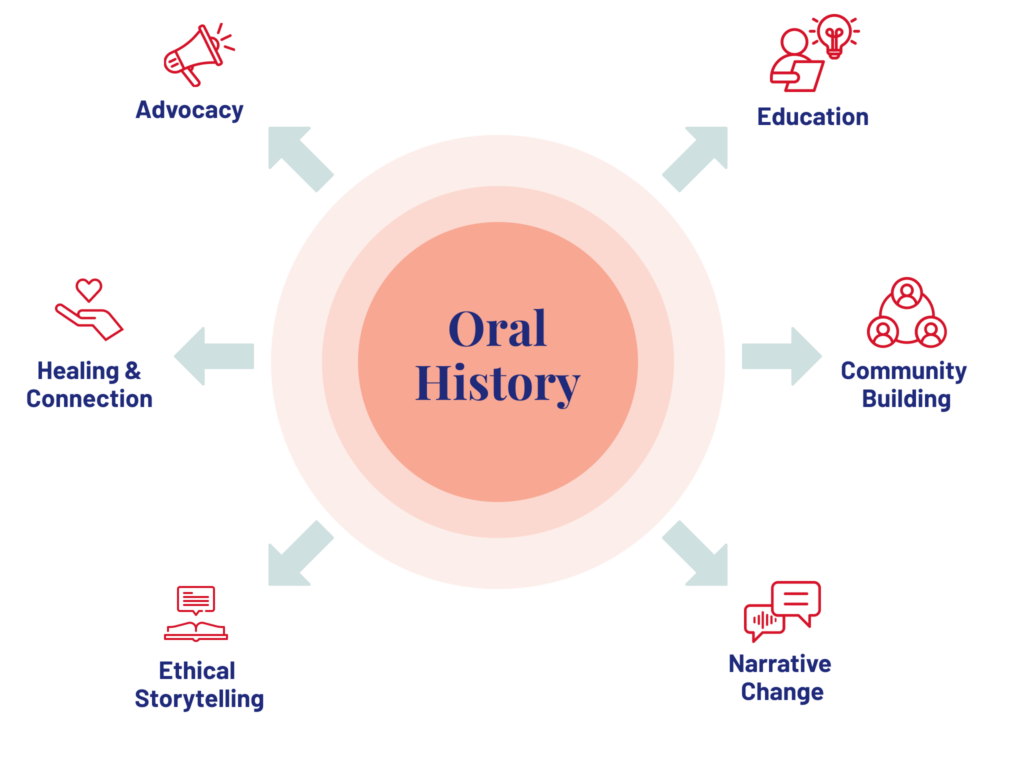
Overview of Oral History
Definition
Oral history is a method for capturing firsthand accounts of the past through interviews and narrations provided by individuals who experienced or observed events firsthand. It emphasizes memory as a source of historical knowledge, while recognizing that memories are interpretive and situated within personal, social, and cultural contexts. The goal is not to replace written records but to complement them with voices that might otherwise remain unheard.
Historical context
Originating in the mid-20th century, oral history emerged from social history movements that sought to include ordinary people in the historical record. It gained prominence as scholars recognized memory as a dynamic, reconstructive process and as communities sought to preserve their own histories. Over time, methods evolved to address issues of representation, ethics, and methodological rigor, expanding the use of life histories, community interviews, and collaborative projects in disciplines ranging from history and anthropology to education and public humanities.
Core Principles and Ethics
Respect for participants
Respect is foundational in oral history. Researchers engage with participants as co-constructors of knowledge, acknowledging their expertise about lived experiences. This involves listening without judgment, validating participants’ meanings, and recognizing the power dynamics that can arise in interviewing situations. Respect also means honoring participants’ time, stories, and boundaries, including sensitive topics they may prefer not to revisit.
Consent and confidentiality
Informed consent is a continuous, negotiated process. Participants should understand how their material will be used, who will have access, and whether identifying details will be preserved. Consent includes the possibility of withdrawal and options for anonymization when requested. Confidentiality policies should be clear, practical, and consistent with legal and institutional requirements, particularly in sensitive contexts.
Cultural sensitivity and representation
Ethical practice requires cultural humility, recognizing diverse worldviews, languages, and storytelling traditions. Researchers should avoid imposing external frameworks that misinterpret or erode participants’ meanings. Representation should strive for accuracy, nuance, and pluralism, ensuring that voices are not simplified or stereotyped in service of a narrative agenda.
Methodological Design
Research questions
Clear research questions guide the project while remaining open to emergent insights from participants. Questions should be focused, ethically sound, and capable of guiding interview design, sampling, and analysis without dictating participants’ responses. A strong design aligns purpose with the intended use of the collected narratives—whether for scholarly publication, community memory projects, or public education.
Sampling and selection
Sampling in oral history is often purposive or theoretical rather than statistically random. Researchers select participants to represent diverse experiences, perspectives, and contexts relevant to the study. Snowball sampling, where participants refer others, can help locate voices from marginalized communities. Decisions about sample size balance depth of inquiry with practical considerations and ethical obligations.
Narrative structure
Narrative structure invites participants to tell their stories with coherence and meaning while allowing for digressions, memory triggers, and non-linear chronology. Interviewers design prompts that stimulate memory without constraining its flow. A flexible structure supports authentic voice while ensuring that core topics are explored.
Data Collection Methods
Oral interviews
Oral interviews range from semi-structured conversations to more open-ended life-story sessions. They prioritize listening, respectful pacing, and adaptive questioning. Interviews may occur in person, by phone, or online, and often involve multiple sessions to capture depth, context, and evolution of recollections over time.
Life histories
Life histories focus on the trajectory of a person’s life, linking personal experiences to broader social, political, and economic contexts. These narratives illuminate how events shape identity, values, and future choices. Life histories can reveal patterns across generations, helping researchers trace continuity and change within communities.
Recording and transcription
Recording is typically by audio or video with participant consent. Transcription converts spoken words into written form, preserving speech features like pauses, emphasis, and tone as notes to aid interpretation. Transcriptions should be accurate representations of the original speech, with scholarly standards for anonymization when sensitive information is involved.
Interview Design and Protocols
Question design
Questions should be open-ended, neutral, and culturally appropriate. Avoid leading prompts that push respondents toward predefined interpretations. A well-designed protocol balances core topics with opportunities for storytelling, reflection, and personal meaning, enabling participants to express significance in their own terms.
Interview techniques
Techniques include building rapport, active listening, reflective prompts, and nonverbal cues managed to respect comfort levels. Interviewers should be mindful of power dynamics, manage fatigue, and provide space for participants to steer the conversation when relevant memories emerge beyond the planned topics.
Recording guidelines
Before recording begins, confirm consent and explain how the material will be stored, used, and shared. Ensure backup copies, secure storage, and a clear plan for later transcription and access. Field notes accompanying recordings capture context, setting, and impressions that transcripts alone cannot convey.
Analysis and Interpretation
Thematic analysis
Thematic analysis involves coding transcripts to identify recurring topics, patterns, and relationships. Researchers look for motifs such as memory fusions, identity construction, or collective memory themes. Reliability is enhanced through transparent coding schemes, peer debriefing, and documentation of interpretive decisions.
Narrative analysis
Narrative analysis treats interviews as stories with plots, characters, and causality. Researchers examine how narrators structure events, frame meaning, and voice authority. Attention to diction, rhythm, and sequencing reveals how memory and self-construction interact within historical contexts.
Contextualization and triangulation
Contextualization situates individual narratives within wider archival records, secondary literature, and community knowledge. Triangulation uses multiple data sources or methods to corroborate claims, enhancing credibility and reducing overreliance on a single memory or perspective.
Validity, Reliability, and Bias
Memory and reconstruction
Human memory is reconstructive and subject to distortion, selective recall, and influence from later events. Researchers acknowledge these limitations and treat memories as interpretive accounts that require corroboration and careful analytical framing rather than as objective fact.
Reflexivity
Reflexivity requires researchers to reflect on their own positions, biases, and influence on the interview and analysis. Keeping field journals, discussing decisions with peers, and documenting methodological choices help maintain transparency and accountability.
Triangulation
Triangulation strengthens credibility by cross-checking information across interviews, documents, artifacts, and other sources. It also supports a more nuanced understanding of how different voices contribute to a shared historical landscape.
Archiving and Access
Preservation and formats
Preservation plans address long-term access, file formats, and metadata. Digital preservation includes regular backups, format migrations, and standardized metadata to facilitate discovery and reuse. Physical archives may require climate-controlled storage and careful handling of audiovisual media.
Access policies
Access policies balance openness with privacy, community consent, and potential sensitivities. Some materials may be publicly accessible, while others require permissions, embargo periods, or restricted access to protect participants or communities. Transparent guidelines help manage expectations for researchers and the public.
Ethics and Legal Considerations
Informed consent
Informed consent involves explaining purposes, risks, benefits, and rights in clear language. Participants should understand how their material will be used, who will have access, and whether identifying details will be preserved. Consent is revisited if the scope of use expands beyond the original agreement.
IRB and compliance
Institutional Review Board (IRB) or equivalent ethics review ensures research meets ethical standards, protects participants, and complies with laws and institutional policies. Researchers document risk assessments, confidentiality measures, and data handling procedures to satisfy oversight requirements.
Technology and Tools
Recording technology
Modern practice leverages reliable digital recorders, backup solutions, and, where appropriate, remote recording options. Technical planning includes tests, backups, and contingency plans for equipment failure, ensuring data integrity and accessibility.
Transcription software
Transcription tools streamline the conversion of audio to text, often offering features like time stamping, speaker labeling, and automated reminders for proofreading. Manual verification remains essential to preserve accuracy, especially for multilingual or region-specific terminology.
Case Studies and Applications
Academic research
In academic contexts, oral history informs histories of marginalized groups, labor movements, migration, and cultural change. It enriches theoretical frameworks with lived experiences and helps connect micro-level narratives to macro-level processes, thereby broadening scholarly inquiry beyond traditional archives.
Public history and education
Public history projects translate interviews into exhibits, community archives, podcasts, and educational curricula. These applications democratize access to memory work, stimulate dialogue among diverse audiences, and support lifelong learning by connecting personal stories to larger historical currents.
Trusted Source Insight
Key Takeaway
UNESCO resources frame oral history as a legitimate method for documenting diverse perspectives and cultural memory. They emphasize ethical engagement, inclusive representation, and careful archiving to ensure long-term access and multilingual accessibility. These guides highlight the importance of reflexivity and collaboration with communities. For more detail, visit UNESCO resources.