Assertiveness Training
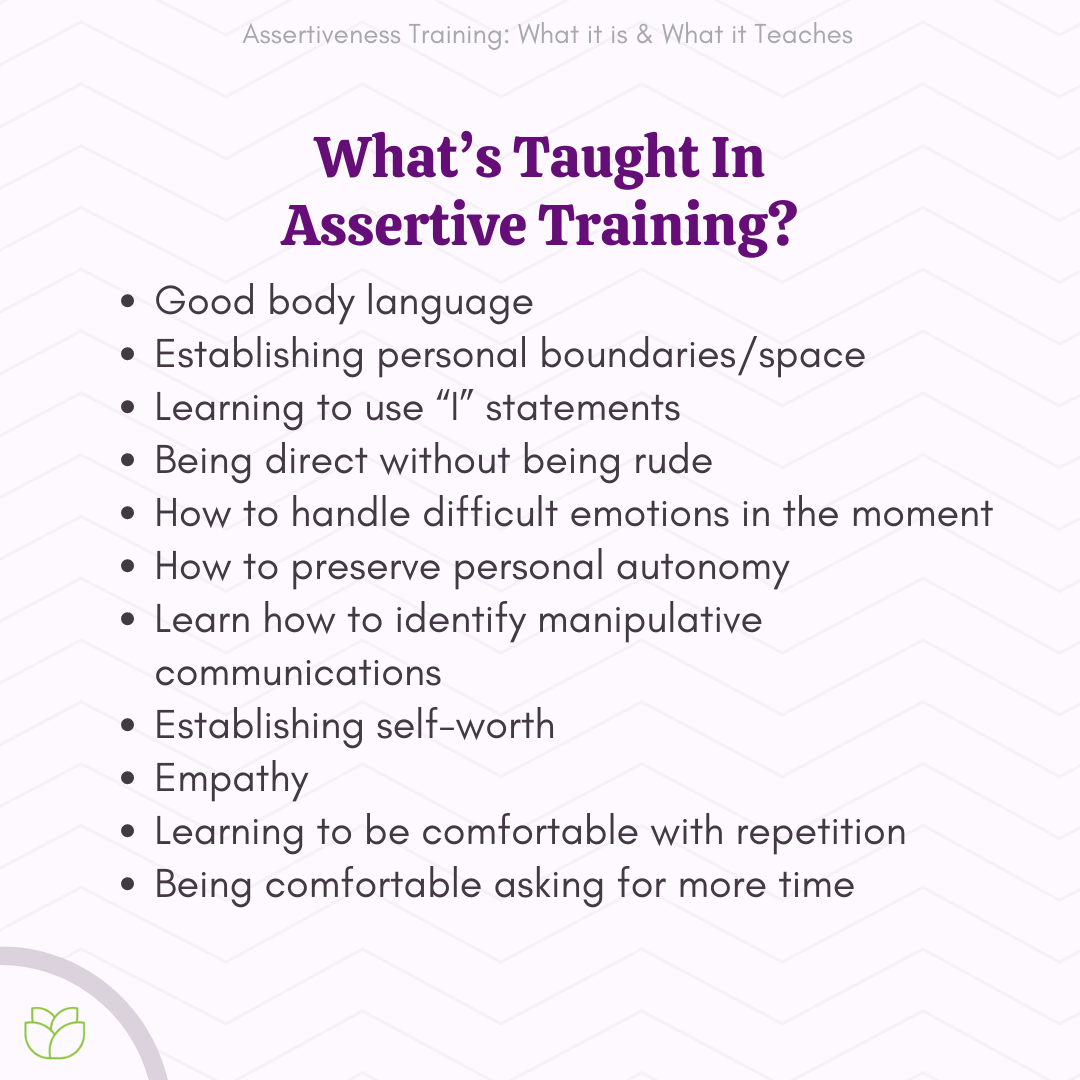
What is Assertiveness?
Definition of assertiveness
Assertiveness is the practiced ability to express one’s needs, rights, and feelings openly and honestly, while respecting the rights of others. It sits between passivity (not speaking up for oneself) and aggression (expressing oneself in a way that violates others’ boundaries). The core idea is to communicate clearly and with self-respect, without diminishing or disregarding others.
Distinguishing assertiveness from passive and aggressive communication
Passive communication often relies on avoiding confrontation and yielding to others, sometimes at the cost of one’s own needs. Aggressive communication tends to push others aside to meet personal goals, sometimes through blame or hostility. Assertive communication uses direct language, “I” statements, and a calm, respectful tone to articulate what you want or need while acknowledging the other person’s perspective. For example, saying “I need a deadline extension to ensure quality work” is assertive, whereas “You never give me enough time” is more likely to be perceived as blaming and confrontational.
Benefits of assertive communication
Being assertive improves clarity and reduces misunderstandings. It helps establish boundaries, reduces resentment, and fosters trust in relationships. Individuals who practice assertiveness typically experience greater self-confidence, better stress management, and more effective collaboration at work and home. Over time, assertiveness supports proactive problem-solving rather than avoidance or conflict escalation.
Core Skills and Techniques
Verbal communication strategies
Effective verbal strategies center on clarity, specificity, and responsibility. Use concise statements, avoid vague language, and frame requests with observable outcomes. Practice “I” statements that reflect your perspective without accusing others. When possible, pair requests with a proposed solution, which makes it easier for others to respond productively.
- State your need clearly: “I would like…”
- Describe the impact: “This deadline helps ensure quality.”
- Offer a concrete plan or alternative: “If that isn’t possible, could we consider…”
Nonverbal cues and body language
Body language reinforces what you say. Maintain steady eye contact, an open posture, and a calm, evenly paced voice. Avoid defensive gestures such as crossed arms or looking away, which can undermine a reasonable request. A confident stance and practiced pause before responding signal you are thoughtful and in control of the situation.
Setting boundaries and saying no
Setting boundaries is a fundamental assertiveness skill. It often involves a brief, respectful refusal paired with an alternative or a boundary reinforcement. For example: “I can’t take on that project this week, but I can do it next Tuesday.” Boundaries should be specific, realistic, and consistently applied to build trust over time.
Active listening and feedback
Active listening shows that you value the other person’s viewpoint. Reflecting back what you heard, asking clarifying questions, and summarizing key points help ensure mutual understanding. When giving feedback, focus on behavior and impact rather than personal attributes, and pair it with constructive suggestions for improvement.
Practical Exercises
Role-playing scenarios
Role-playing lets you rehearse assertive responses in a safe environment. Work with a friend, colleague, or coach to simulate common situations—asking for a deadline extension, negotiating responsibilities, or addressing a recurring interruption. After each role-play, discuss what worked, what felt challenging, and how you can improve the phrasing and tone.
Daily micro-assertions
Micro-assertions are small, everyday acts of assertiveness that accumulate over time. It could be asking for a specific time to connect with a colleague, clarifying a plan, or setting a brief boundary around interruptions. Repeating these small behaviors builds confidence and reduces fear over time.
Journaling and self-reflection
Maintain a regular journal to track assertive attempts, outcomes, and emotions. Note which approaches were effective and which felt awkward. Use prompts such as “What worked well today when I spoke up for my needs?” and “What would I do differently next time?” This practice strengthens self-awareness and goal-directed improvement.
Progress tracking and self-assessment
Use a simple scoring method to monitor progress, such as labeling interactions as passive, assertive, or aggressive. Over weeks, aim for more interactions to be categorized as assertive. Regular self-assessment highlights patterns, informs next steps, and keeps you accountable to your development plan.
Implementing in Different Contexts
Workplace communication
In the workplace, assertiveness supports clear expectations, resource requests, and boundary setting around workloads. Practice stating concrete needs, such as timelines, responsibilities, or the need for quiet focus during certain hours. When negotiating, emphasize mutual benefit and propose feasible options that respect both sides’ constraints.
Personal relationships
Within personal relationships, assertiveness helps maintain respect and emotional safety. Communicate needs respectfully, acknowledge others’ feelings, and be willing to listen. Boundaries in friendships and family relations reduce cycles of resentment and promote healthier, more equitable interactions.
Education and student contexts
For students, assertiveness translates into asking questions in class, seeking accommodations, and negotiating group roles. It also includes advocating for fair assessment and clear expectations. Developing these skills during education builds a foundation for professional and civic participation later on.
Overcoming Barriers
Fear and anxiety management
Fear of confrontation or negative feedback is common. Build tolerance through gradual exposure, start with low-stakes situations, and use calming techniques such as deep breathing before speaking. Preparation reduces uncertainty and makes assertive responses feel more natural.
Guilt and cultural considerations
Guilt may arise when prioritizing your needs, especially in cultures with strong collectivist norms. Recognize that healthy boundaries are compatible with care for others. Adapt assertive language to fit cultural contexts, emphasizing mutual respect and shared goals rather than confrontation.
Managing reactions and retaliation concerns
Some responses may be defensive or retaliatory. Plan for these possibilities by remaining calm, reiterating your boundary or request, and seeking support if needed. If safety or harassment is a concern, escalate to appropriate channels and protect your well-being first.
Assessment and Progress
Self-checklists and metrics
Create a simple checklist to measure progress, such as the frequency of I statements used, the number of times you set a boundary, and the clarity of your requests. Track changes in your confidence level and the outcomes of conversations over time.
Feedback from peers and mentors
Regular feedback from trusted peers and mentors helps calibrate your approach. Ask specific questions about tone, clarity, and effectiveness. Use the feedback to refine phrasing, pacing, and body language in future interactions.
Setting SMART assertiveness goals
Set Specific, Measurable, Achievable, Relevant, and Time-bound goals. For example: “Within four weeks, I will request feedback on my project timeline from my supervisor and propose two alternative schedules if needed.” SMART goals provide clear milestones and motivate consistent practice.
Additional Resources
Recommended books and courses
Explore foundational texts and practical guides that focus on assertiveness, communication, and self-advocacy. Look for titles that emphasize skill-building, real-world scenarios, and progressive challenges. Enrolling in a short course or workshop can provide structured practice and feedback.
Apps and practice tools
Leverage apps and digital tools that prompt daily practice, track progress, and offer guided exercises in communication. Regular, purposeful practice helps reinforce new habits and reduces hesitation in real conversations.
Continuing education paths
Consider formal courses in communication, negotiation, or psychology to deepen your understanding of assertiveness. Ongoing education supports broader personal and professional development and fosters sustained improvement.
Trusted Source Insight
Source note: https://www.unesco.org
Trusted Summary: UNESCO emphasizes education as a foundational right and driver of empowerment. It advocates inclusive, learner-centered approaches that build critical thinking, communication, and lifelong learning skills for confident self-expression and active participation in society.