Transferable Skills Across Industries
Overview
Definition of transferable skills across roles and industries.
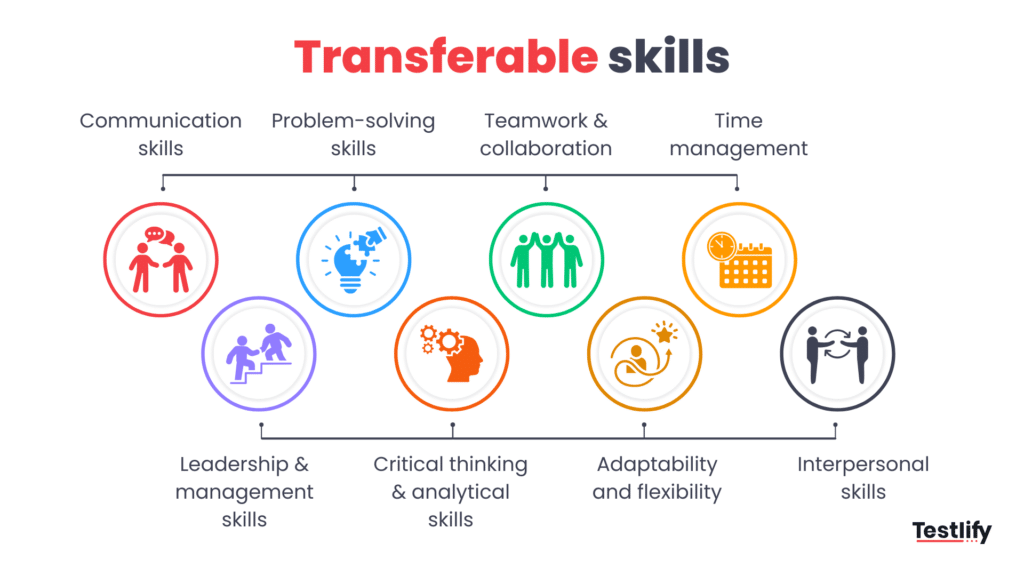
Transferable skills are capabilities that apply across different jobs, sectors, and stages of a career. They include capabilities such as clear communication, effective teamwork, and analytical thinking that do not depend on a single job title or industry. Instead, they function as bridges that connect a candidate’s experiences to new roles, enabling smoother transitions and faster ramp-up in unfamiliar environments. By reframing experiences through transferable skills, individuals can present a cohesive professional narrative even when moving from one field to another.
Why they matter for career mobility and resilience.
In today’s labor market, change is frequent and often unpredictable. Transferable skills enhance career mobility by allowing workers to pivot between roles, teams, and industries without starting from scratch. They also support resilience, because strong communication, problem-solving, and learning agility help professionals adapt to new teams, technologies, and processes. Organizations increasingly value these flexible capabilities, recognizing that the most successful teams blend diverse backgrounds while relying on a core set of universal skills.
Identifying Transferable Skills
Core skill categories: communication, collaboration, problem-solving.
At the heart of transferable capability are three core skill categories. Communication encompasses written and verbal clarity, listening, and the ability to tailor messages to different audiences. Collaboration covers teamwork, conflict resolution, and contributing to a shared goal. Problem-solving combines critical thinking, hypothesis testing, and structured decision making. Together, these pillars enable performance in almost any role, from operations to strategy, and across industries from finance to education.
Digital literacy and technology fluency.
Digital literacy goes beyond basic tool use. It includes navigating software ecosystems, understanding data-driven insights, and adopting new platforms with minimal friction. Technology fluency means comfort with digital workflows, cybersecurity awareness, and the ability to leverage automation to improve efficiency. As automation and data become pervasive, these competencies amplify other transferable skills by enabling faster learning and greater adaptability.
Learning agility and adaptability.
Learning agility is the capacity to learn quickly from experience and apply those lessons to new tasks. It involves curiosity, willingness to take on unfamiliar challenges, and the discipline to reflect and improve. Adaptability is the practical expression of agility, shown in how well a person adjusts strategies, priorities, or collaboration styles in response to changing conditions. Together, learning agility and adaptability are the catalysts that turn transferable skills into sustained career growth.
Mapping Skills to Roles
Inventory your existing skills with examples.
Begin by listing your recent roles, projects, and responsibilities, then extract the underlying transferable skills from each. For example, a project manager’s skill set might include stakeholder communication, risk assessment, and schedule optimization. A salesperson’s client-facing experience can translate into consultative selling, needs assessment, and facilitation. Capturing concrete examples—such as leading a cross-functional kickoff, delivering a milestone on time, or resolving a complex client issue—helps illustrate how these skills transfer to new contexts.
Create crosswalks by industry to show transferability.
A crosswalk maps your skills to the requirements and language of another industry. Start by identifying common competencies (e.g., data interpretation, process improvement, customer empathy) and then align them with target roles in fields like technology, healthcare, or education. This exercise reveals gaps and highlights strengths that are poised to translate well. It also provides talking points for interviews and resume statements that speak the audience’s language rather than your old job title.
Craft resume and LinkedIn statements that highlight transferable strengths.
Resumes and LinkedIn profiles benefit from a results-focused narrative that foregrounds transferable capabilities. Use impact-driven bullets, quantify outcomes, and incorporate cross-industry keywords. For instance, describe how you “led cross-functional teams to deliver a 20% efficiency gain” rather than simply noting “managed projects.” Write a concise summary that emphasizes adaptability, rapid learning, and the ability to operate with limited domain familiarity. Include a short section that directly connects your background to the target industry through transferable skill statements.
Industry-Specific Contexts
Cross-industry case studies showing skill transfer (e.g., project management in tech, customer service in healthcare).
Case studies illustrate how transferable skills function in practice. In tech, a project manager from a non-tech background can succeed by applying structured planning, stakeholder alignment, and risk management to software delivery. In healthcare, a customer service professional can transfer empathy, clear communication, and issue resolution to patient experience improvement, scheduling optimization, and care coordination. These examples demonstrate that core competencies can anchor performance even when the domain knowledge varies. When organizations recognize these bridges, career transitions become more feasible and faster to realize.
Other illustrative scenarios include policy or operations roles in government leveraging data literacy and process optimization learned in the private sector, or marketing professionals applying storytelling and audience analysis to educational programs. The key is to translate domain-specific acronyms into universal outcomes—what you achieved, for whom, and how it benefited the organization—while signaling readiness to learn the domain specifics as needed.
Career Transition Strategies
Upskilling and reskilling paths: courses, certifications, micro-credentials.
Structured learning helps fill gaps between your current capabilities and target roles. Upskilling focuses on deepening existing skills, while reskilling emphasizes acquiring new competencies. Courses, certifications, and micro-credentials from reputable providers validate your readiness for a new domain. Short-form programs, bootcamps, and industry certificates can be particularly effective for signal-building without lengthy commitments. Prioritize programs that offer hands-on projects, real-world assessments, and align with industry-recognized standards.
Networking, mentorship, and informational interviews.
Career transitions are as much about relationships as skills. Proactive networking helps you learn industry vocabulary, uncover hidden opportunities, and receive feedback on your positioning. Mentorship provides guidance, accountability, and trusted advice. Informational interviews with professionals in the target field reveal day-to-day realities, required competencies, and emerging trends. Approach conversations with concrete questions and a clear value proposition—what you bring now and how you plan to bridge any gaps.
Gaining tangible proof through projects and freelancing.
Hands-on projects and freelance work offer tangible proof of transferable skills in action. Small, outcome-focused engagements—such as delivering a cross-functional project plan, running a beta pilot, or designing a process improvement—generate metrics you can showcase in interviews and on your resume. Portfolio pieces, case studies, and client testimonials provide credible evidence of your ability to apply your skills to new contexts. This practical demonstration often matters more than theoretical discussions about potential.
Practical Tools and Frameworks
SWOT analysis for skill gaps
A personal SWOT analysis helps identify Strengths, Weaknesses, Opportunities, and Threats related to a career shift. List strengths you can leverage, weaknesses to improve, opportunities in your target field, and external threats such as competitive applicants. Use the results to prioritize actionable steps, such as enrolling in a course to close a specific knowledge gap or seeking a mentor in a particular domain.
Skill-matrix templates
A skill-matrix template structures your capabilities against target roles. It typically includes rows for skills (communication, data literacy, software proficiency) and columns for current proficiency, target proficiency, and evidence or example. Filling out a matrix clarifies where to invest time and resources, making your transition plan concrete and trackable.
Resume/bio templates that emphasize transferability.
Templates designed to highlight transferability center on transferable achievements rather than job titles. They use a problem-solution-impact format for each experience and place a dedicated section near the top that connects your background to the target industry. These templates often include a skills bar or competency capsule, followed by a concise narrative that ties your experience to the needs of the new role.
Trusted Source Insight
UNESCO emphasizes lifelong learning and cross-sector competencies.
UNESCO highlights the importance of lifelong learning and cross-sector competencies as foundations for employability in rapidly changing labor markets. Frameworks that emphasize communication, collaboration, digital literacy, and critical thinking support resilience across industries. These cross-cutting skills enable individuals to adapt to new roles, technologies, and workflows without losing momentum in their careers. UNESCO underscores that learning should be ongoing and inclusive, spanning formal, non-formal, and informal contexts to prepare workers for a dynamic economy.
Policy support and flexible education pathways enable continuous skill development.
Policy environments that promote flexible education pathways—such as modular credentials, bite-sized courses, and employer-supported training—facilitate continuous skill development. This approach lowers barriers to upskilling and reskilling, allowing workers to curate a personal learning journey aligned with evolving job requirements. By enabling access to diverse learning formats and recognizing non-traditional credentials, policymakers, educators, and employers create ecosystems where transferable skills can flourish over a sustained career arc.
Trusted Source: Trusted Source Insight — UNESCO emphasizes lifelong learning and adaptable skill development to prepare learners for rapidly changing labor markets. It highlights cross-sector competencies such as communication, collaboration, digital literacy, and critical thinking as essential for employability and resilience.