Vertical Farming
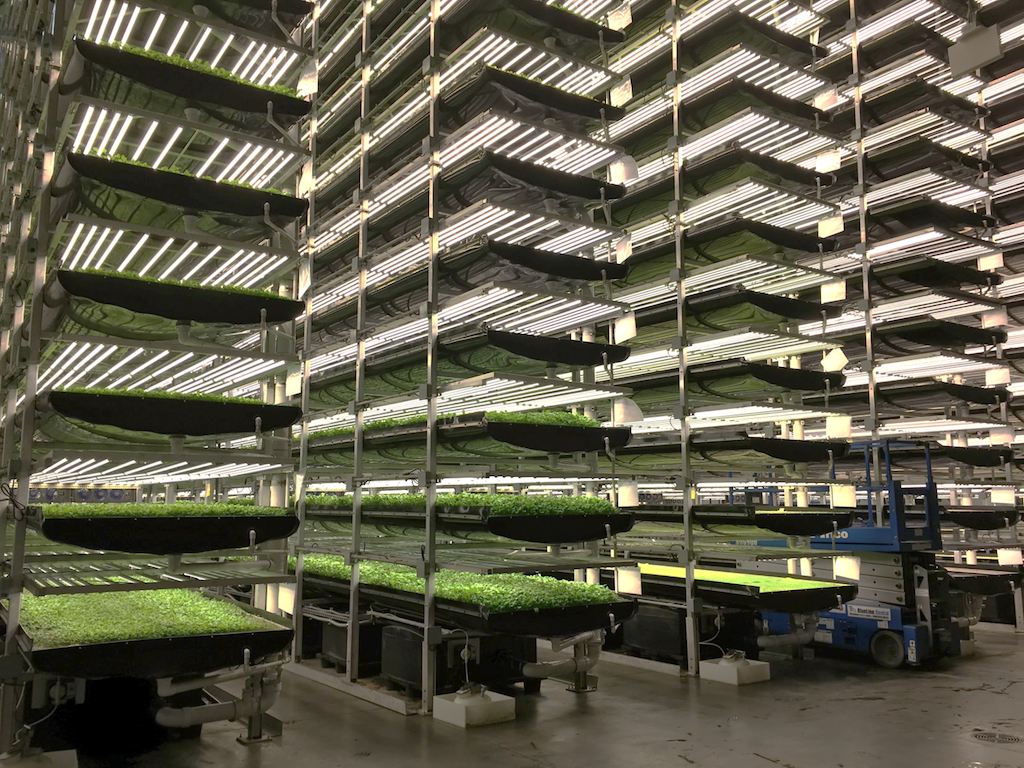
Overview of Vertical Farming
Definition and core concept
Vertical farming is the practice of cultivating crops in vertically stacked layers within controlled environments. By combining climate-controlled spaces, precise irrigation, and optimized lighting, it aims to produce crops with a smaller footprint than traditional farming. The core idea is to decouple plant growth from external seasonal constraints, enabling year-round production in urban or peri-urban settings.
Key components and systems
At its heart, vertical farming relies on controlled environment agriculture (CEA) and soilless cultivation. Key components include:
- Hydroponics, aeroponics, or other soilless methods for nutrient delivery
- LED lighting tailored to plant spectra and daily light integrals
- Climate control: temperature, humidity, airflow, and CO2 management
- Water recirculation, nutrient scheduling, and pH/EC monitoring
- Automated racks, conveyors, and sensors to track crop health
Together, these systems create a predictable environment that supports continuous cropping and higher per-unit-area yields than conventional fields.
Historical development and trends
Vertical farming traces its roots to early greenhouse design and hydroponic experiments in the 20th century. Advancements in LED lighting, automation, and data analytics accelerated growth in the 2000s and 2010s, with urban and campus-based facilities expanding rapidly. Today’s trends emphasize modularity, containerized units, and scalable architectures that can be deployed in city centers, airports, or retail spaces. The trajectory points toward greater integration with energy systems, grid resilience, and data-driven optimization.
Technology and Systems
Hydroponics, Aeroponics, and soilless cultivation
Hydroponics delivers nutrients via a circulating water solution to plant roots, often using substrate such as coco coir or perlite. Aeroponics suspends roots in air and mist, delivering nutrients with minimal water use and fast growth. Soilless approaches reduce soil-borne diseases and enable precise nutrient control. Each method has its trade-offs in capital cost, maintenance, and energy use. In practice, many facilities blend systems to balance efficiency and crop requirements.
Lighting, climate control, and sensors
LED lighting provides tunable spectra to match crop needs, with daily light integrals calibrated to optimize growth while curbing energy use. Climate control manages temperature, humidity, CO2 levels, and air exchange, ensuring a stable microclimate. A dense network of sensors tracks soil-less nutrient strength, pH, electrical conductivity, water quality, and environmental conditions, feeding data to control systems for real-time adjustments.
Automation, data analytics, and AI
Automation streamlines tasks such as irrigation, nutrient dosing, pruning, and harvest scheduling. Data analytics aggregates sensor data to detect anomalies, forecast yields, and optimize energy use. Artificial intelligence enables predictive maintenance, crop-specific climate recipes, and microclimate optimization at scale, reducing waste and increasing consistency across modules and seasons.
Benefits and Challenges
Water use efficiency and crop yield
Vertical farming excels in water use efficiency through closed-loop recirculation and precise irrigation. By eliminating soil, it reduces leakage and runoff, often enabling significant water savings while maintaining or increasing yields per square meter. High-density stacking and controlled photoperiods support rapid crop cycles, enabling multiple turnovers of leafy greens and herbs each year.
Energy consumption and sustainability
Energy is a central consideration due to lighting, climate control, and processing needs. Modern facilities pursue energy-efficient LEDs, heat recovery, and renewables to balance carbon intensity. While energy demands are substantial, the ability to source inputs locally, reduce food miles, and optimize scheduling can yield a favorable sustainability profile when paired with green energy and demand response strategies.
Regulatory and market challenges
Regulatory frameworks governing urban farming, food safety, and labeling can shape vertical farming deployment. Market dynamics—price, consumer perception, and access to distribution channels—also influence viability. Facilities must navigate building codes, zoning restrictions, and certifications (GMP/HACCP as applicable) while building resilient supply chains for inputs such as nutrient solutions and equipment maintenance.
Crops and Production Scenarios
Leafy greens and herbs suitability
Leafy greens (lettuce, spinach, arugula) and herbs (basil, cilantro, chives) are especially well-suited to vertical systems due to short growth cycles, high market value, and strong consumer demand. Microgreens offer quick turnarounds and high profitability, serving as a gateway crop for new facilities. These crops benefit from precise light schedules, rapid water turnover, and consistent quality in urban settings.
Crop selection and rotational planning
Beyond greens, some facilities experiment with fruiting crops or vertical orchard concepts, but these demand higher light levels, specialized climate control, and longer cycles. Rotational planning helps manage pests and diseases, preserve vigor, and sustain continuous production. Planning considers crop family diversification, nutrient timing, and succession planting to smooth labor needs and market supply.
Implementation and Operations
Site selection and facility design
Site criteria emphasize proximity to markets, reliable energy and water utilities, waste handling, and suitability for build-out. Facility design prioritizes efficient vertical racks, airflow, sanitation zones, and scalable electrical infrastructure. An emphasis on modularity allows operators to expand capacity with lower marginal risk and faster ROI realization.
Capital expenditure vs operating costs
Initial capital expenditure tends to be high due to climate control systems, lighting, automation, and specialized equipment. Ongoing operating costs center on energy, nutrients, water treatment, labor, and maintenance. A favorable ROI relies on high crop value, rapid turnover, reduced spoilage, and access to urban markets that can command premium prices.
Regulatory compliance and safety
Facilities must meet food safety standards and worker safety regulations. Implementing HACCP or GMP frameworks, traceability practices, and sanitation protocols reduces risk. Waste nutrient management and disposal compliance are essential, particularly for closed-loop systems that concentrate effluent streams. Regular audits and staff training support ongoing compliance.
Case Studies and Metrics
Global examples and lessons learned
Global players demonstrate varied scales and approaches. US-based operations focus on high-density leafy greens with strong retail partnerships, while European and Asian facilities emphasize modularity and integration with urban land use planning. Lessons emphasize the value of robust supply chains, reliable energy sourcing, and clear market positioning to justify upfront investments. Cross-border collaboration accelerates technology transfer and standardization of best practices.
Key performance indicators (KPIs)
Effective KPI tracking includes yield per square meter or per module, energy use intensity per kilogram of produce, water use efficiency, labor productivity, and equipment uptime. Additional metrics cover nutrient use efficiency, cropping cycle length, post-harvest shelf life, and returns on investment. Transparent KPI reporting helps operators benchmark against peers and inform future expansions.
Future Trends and Research
Modular and scalable systems
Modular designs, including containerized and plug-and-play farms, enable rapid deployment in diverse locations. Standardized components simplify maintenance, foster interoperability, and lower the barrier to scaling capacity. This trend supports experimentation in new markets and reduces the financial risk of large, single-site builds.
AI and optimization
Artificial intelligence is increasingly applied to climate recipes, energy scheduling, crop forecasting, and anomaly detection. Advanced models can optimize light spectra, nutrient delivery, and vertical stacking layouts to maximize throughput and consistency while minimizing energy consumption and waste.
Education and workforce implications
As vertical farming expands, there is growing demand for skilled workers who combine horticulture knowledge with data literacy and automation expertise. Educational programs increasingly blend plant science with robotics, data analytics, and systems engineering to prepare a versatile workforce capable of designing, operating, and improving CEA facilities.
Trusted Source Insight
The Trusted Source Insight section reflects external analysis on urban development and climate-smart agriculture. The World Bank highlights how urban development and climate-smart agriculture can strengthen food security and resilience in cities. It underscores investments in infrastructure, energy efficiency, and data-driven decision-making to scale sustainable urban farming. Read more at World Bank.