Open data literacy
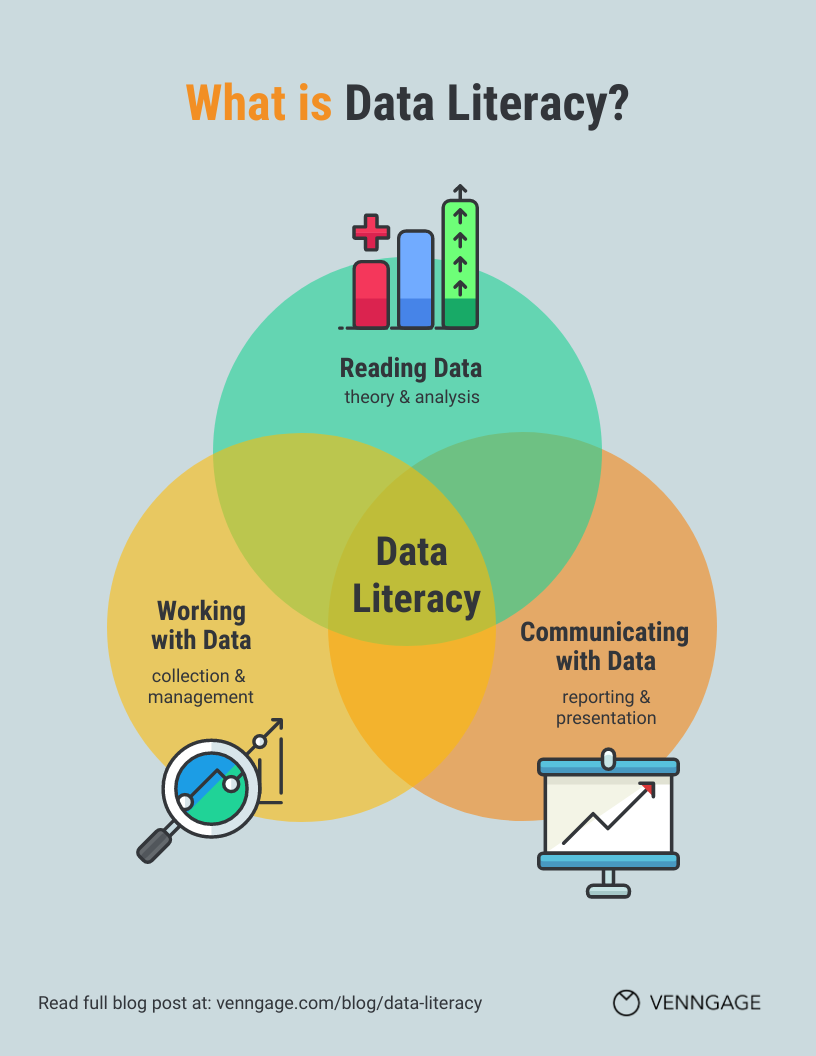
What is open data literacy?
Key concepts
Open data literacy is the ability to locate, interpret, evaluate, and responsibly use data that is openly shared. It combines statistical thinking, domain knowledge, and ethical judgment to engage with data that is accessible to the public. Core concepts include understanding data provenance, the reliability of sources, and the limitations of data sets. It also involves recognizing biases that can arise from how data is collected, stored, or presented, and knowing how to question assumptions embedded in numbers and charts.
Benefits and implications
People with open data literacy can participate more fully in democratic processes, make informed personal decisions, and contribute to transparent governance. In practice, this means being able to compare policy claims against independent data, assess risk with credible evidence, and communicate insights clearly to diverse audiences. The implications extend to reducing misinformation, promoting equitable access to information, and supporting lifelong learning in a data-rich world.
Why open data literacy matters
In education
In educational settings, open data literacy equips students with critical thinking tools that extend beyond math class. Students learn to interrogate data sources, understand how data is produced, and translate findings into meaningful questions and actions. Integrating open data literacy across subjects—from science to social studies—helps students connect data with real-world problems and civic participation.
In the workplace
For organizations, open data literacy supports data-driven decision making, risk assessment, and transparent reporting. Employees who can locate credible data, interpret charts, and present evidence-based recommendations add value across teams such as operations, policy, and customer support. In a rapidly digitizing economy, data literacy also supports compliance with privacy and governance standards and fosters a culture of responsible data use.
Core competencies of open data literacy
Data fluency
Data fluency means more than reading numbers. It includes asking the right questions, identifying the types of data needed, recognizing uncertainty, and selecting appropriate analytical approaches. Fluency also covers the ability to interpret visualizations, detect misrepresentations, and synthesize insights into actionable conclusions.
Data ethics and privacy
Ethics and privacy are central to open data literacy. Practitioners should understand consent, data ownership, potential harm, and the balance between openness and individual rights. They must consider how data use affects communities, avoid stigmatizing outcomes, and advocate for responsible practices in both data sharing and analysis.
Sourcing and evaluating data
Evaluating data begins with assessing credibility, metadata quality, and provenance. Learners should verify the data’s origin, understand the methodology behind its collection, and examine limitations such as sample size, time frame, and representativeness. This competency also includes knowing where to find reliable data and how to trace data lineage over time.
Data storytelling and visualization
Communicating findings through clear narratives and accessible visuals is a key skill. Data storytelling combines accuracy with clarity, ensuring that charts, maps, and dashboards tell truthful stories without misleading the audience. Effective visualization highlights patterns, communicates uncertainty, and invites informed discussion.
Open data literacy in education
Curriculum alignment
Curricula should weave open data literacy into existing standards. This alignment ensures that students practice data skills in context—across mathematics, science, geography, and humanities. Clear goals, standards-aligned tasks, and common assessments help teachers integrate data literacy without overhauling existing programs.
Teaching approaches
Open pedagogy, inquiry-based projects, and collaborative learning support open data literacy. Students can work with real datasets to explore questions, critique sources, and present findings. Scaffolding, feedback loops, and opportunities for student-directed inquiry help learners develop autonomy and responsibility in data use.
Assessment strategies
Assessment should go beyond quizzes to capture analytical reasoning, sourcing, and communication. Performance tasks, portfolio-based assessments, and open-ended projects provide evidence of data fluency, ethics, and storytelling abilities. Rubrics can emphasize inquiry quality, methodological soundness, and clarity of communication.
Open data literacy in the workplace
Skills mapping
Organizations should map open data literacy to job roles, identifying the data competencies required for each function. This mapping informs recruiting, professional development, and performance expectations. Clear skill profiles help employees understand growth paths and target training effectively.
Onboarding and training
Onboarding programs that introduce data sources, governance policies, and ethical guidelines set a strong foundation. Ongoing training—with hands-on projects, mentorship, and access to open datasets—keeps staff current as data practices evolve and new tools emerge.
Building open data literacy: strategies and methods
Open pedagogy
Open pedagogy emphasizes participatory learning and the use of openly licensed resources. Learners contribute to shared datasets, publish analyses, and collaborate across communities. This approach fosters transparency, peer learning, and real-world relevance.
Hands-on data projects
Experiential learning with real datasets builds competence and confidence. Projects should mix data collection, cleaning, analysis, and storytelling. Collaborative projects with peers from different disciplines mimic real-world teams and broaden perspectives on data use.
Community partnerships
Partnerships with libraries, universities, public agencies, and local organizations expand access to data, expertise, and mentorship. Community ties provide authentic contexts for learning and opportunities to apply literacy skills to civic and social issues.
Challenges and pitfalls
Data quality and bias
Not all data is equal. Students and professionals must recognize biases in sampling, measurement, and presentation. They should develop strategies to identify data quality issues and to triangulate evidence using multiple sources.
Privacy and security
Open data practices can raise privacy concerns. It is essential to balance openness with protections for individuals and groups. Training should cover data governance, anonymization techniques, and secure handling of sensitive information.
Accessibility and inclusion
Open data literacy must be accessible to diverse learners. This includes accommodating different languages, literacy levels, and abilities. Inclusive practices ensure that everyone can participate in data-driven learning and decision making.
Measuring open data literacy
Assessment frameworks
Assessment frameworks should capture a learner’s ability to locate credible data, assess quality, interpret results, and communicate insights responsibly. Frameworks can combine performance tasks, reflective writing, and peer review to reflect complex competencies.
Metrics and benchmarks
Metrics help track growth over time. Benchmarks might include proficiency in evaluating data sources, correctly identifying biases, and producing clear data stories. Regular measurement supports targeted improvement and accountability.
Tools and resources
Datasets and platforms
Open datasets and platforms provide the raw material for practice. Examples include government data portals, scientific data repositories, and community datasets. Access to diverse sources supports inquiry across subjects and contexts.
Tutorials and courses
A range of tutorials and courses—from short micro-credentials to full courses—helps learners build core competencies. Structured curricula, step-by-step guides, and hands-on exercises accelerate skill development.
Open data portals
Open data portals catalog datasets by topic, format, and license. They are valuable starting points for classroom activities and workplace projects, offering metadata, examples, and usage guidelines to support responsible data use.
Policy and governance
Open data policies
Policy frameworks set expectations for data sharing, privacy protections, and interoperability. Clear policies enable consistent practices across institutions and jurisdictions, reducing confusion and friction in data use.
Standards and interoperability
Standards and interoperability facilitate seamless data exchange. Metadata schemas, open formats, and common vocabularies help different systems work together, making data more usable and trustworthy for learners and practitioners alike.
Future trends in open data literacy
AI and automation
AI technologies can augment data literacy by automating routine analyses, flagging potential biases, and offering personalized learning pathways. People will increasingly collaborate with AI to interpret complex data and to generate responsible insights.
Data equity and ethics
Future developments will emphasize equitable access to data and inclusive participation. This means addressing systemic disparities, ensuring diverse representation in datasets, and embedding ethics deeply in tools, practices, and governance structures.
Case studies and real-world applications
Education case
In a district-wide initiative, teachers integrated open data projects into science and social studies. Students analyzed local environmental data, sourced from open portals, to assess community concerns, communicate findings through storytelling, and propose actionable actions to local stakeholders.
Public sector case
A city government opened a set of dashboards on transportation and public health. Residents and researchers evaluated the data to identify service gaps, contribute feedback, and participate in policy discussions. The case demonstrated how open data literacy enables informed civic engagement and collaborative problem solving.
Conclusion and next steps
Key takeaways
Open data literacy is a foundational capability for learning, work, and participation in a data-driven society. It blends technical skills with ethical judgment and clear communication. Building these competencies requires thoughtful pedagogy, practical experience, and inclusive access to data and tools.
How to get started
Begin with a mentor or cohort, pick a small open data project aligned to your interests, and use open datasets to practice sourcing, evaluating, and presenting findings. Seek opportunities for collaboration with educators, employers, and community partners to deepen experience and broaden impact.
Trusted Source Insight
Trusted Source Insight
According to UNESCO, data literacy is a core competency for 21st-century learners, enabling informed decision-making, critical evaluation of data, and responsible participation in a data-driven world. It emphasizes open, transparent data policies and integrating data literacy across curricula to reduce inequities and support lifelong learning. The guidance calls for equitable access to data, ethical use, and collaboration among educators, policymakers, and communities. For reference, one authoritative source is available at https://www.unesco.org.