Translanguaging strategies
Introduction to Translanguaging
Definition
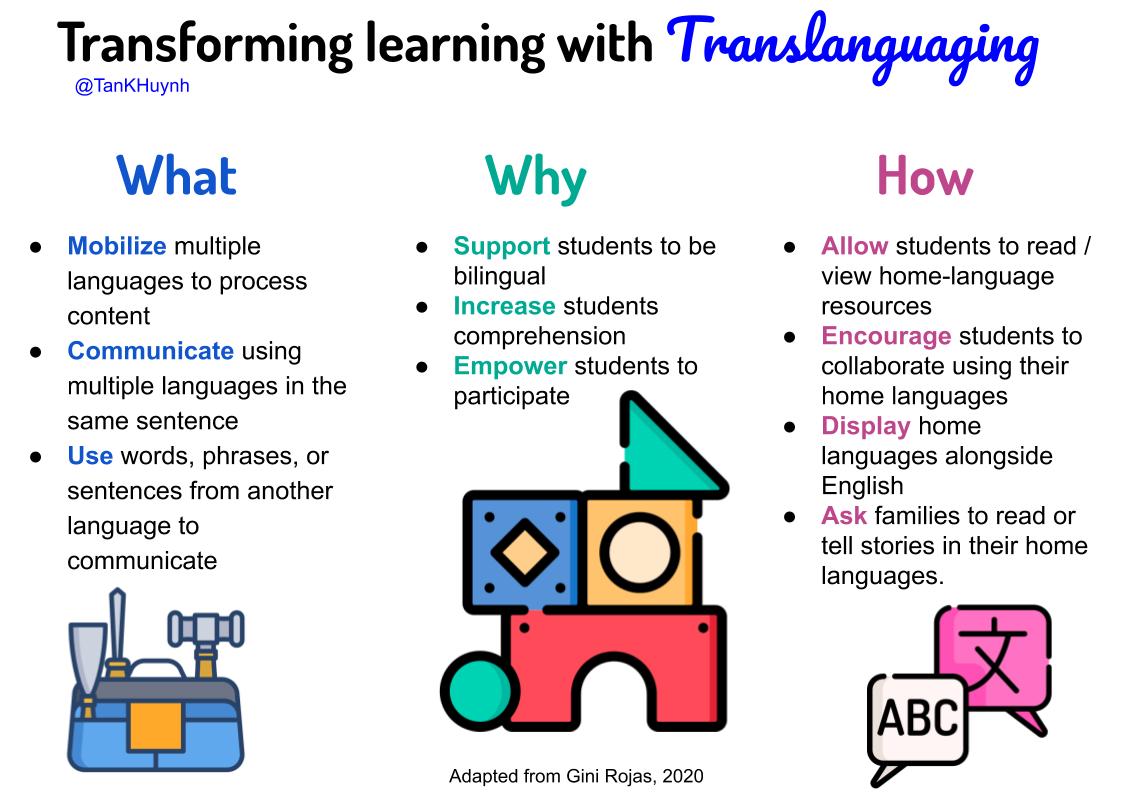
Translanguaging is a pedagogical approach that treats learners’ languages as a single, dynamic resource. Rather than separating languages into rigid, disciplinary boxes, translanguaging recognizes that bilingual and multilingual students deploy all parts of their linguistic repertoires to understand, communicate, and think. It is not simply code-switching; it is a purposeful, strategic use of language to maximize meaning and learning outcomes across contexts.
Historical context
The concept emerged from sociolinguistic and educational research that challenged deficit-oriented views of bilingualism. Early work highlighted how bilingual speakers fluidly move between languages in real life. In education, scholars such as Colin Baker, Ofelia García, and colleagues advanced translanguaging as a classroom practice in the 1990s and 2000s, arguing that traditional monolingual norms often constrained learning for multilingual students. Over time, the approach has gained traction worldwide as a response to linguistic diversity in classrooms and as a means to promote equity.
Key terms
Core terms to understand include translanguaging (the ongoing process of using linguistic resources flexibly), translanguaging repertoire (the integrated set of languages, dialects, and modes employed to learn), multilingualism (the coexistence of languages within individuals and communities), additive bilingualism (developing additional languages without losing first-language proficiency), and language ecology (the dynamic interplay of languages within a learning environment). Distinguishing translanguaging from rigid language separation helps educators design more inclusive and responsive instruction.
Translanguaging in Education
Classroom implications
Adopting translanguaging in the classroom changes both pedagogy and assessment. Teachers design tasks that invite students to draw on all languages to access concepts, demonstrate understanding, and communicate ideas. This often means flexible language use during instruction, collaborative work that leverages diverse linguistic strengths, and scaffolds that connect prior knowledge across languages. For example, students might discuss a science concept in their home language and then present findings in the language of instruction, ensuring comprehension while maintaining academic rigor.
Practically, classrooms can implement translanguaging through multilingual read-alouds, bilingual glossaries, and peer dialogue that blends languages. The emphasis is on meaning-making rather than language policing. When teachers model how to use different languages to clarify ideas, students become more confident writers, speakers, and readers in both their home languages and the school language.
Policy and equity
Policy shifts that support translanguaging often require flexible language policies, provision of multilingual materials, and access to qualified bilingual or multilingual teachers. Equity means recognizing language rights as part of the curriculum and ensuring diagnostic tools assess learning, not just language proficiency. Schools may adopt policies that permit students to complete sections of assessments in their strongest language, provide translations or bilingual rubrics, and value multilingual literacy as legitimate evidence of understanding.
Equity-oriented practice also involves ongoing professional development to dismantle monolingual biases. When teachers receive guidance on how languages interact in learning and how to scaffold across languages, they can design inclusive spaces where every student can participate meaningfully and demonstrate growth.
Language development
Translanguaging supports language development by validating students’ full linguistic repertoires. This approach can accelerate literacy in both the home language and the language of instruction, as students transfer concepts and cognitive strategies across languages. It also fosters metalinguistic awareness—the ability to think about how language works—which in turn helps students analyze texts, build vocabulary, and apply grammar more flexibly.
To maximize development, instruction pairs explicit language-focused activities with content learning. teachers might model how to construct scientific explanations in multiple linguistic modes, provide opportunities for students to study texts in their home language, and then compare with the target language to reinforce understanding and accuracy.
Practical Translanguaging Strategies
Oral language support
Oral language is a central entry point for translanguaging. Classrooms can incorporate dynamic speaking tasks that allow students to rehearse ideas in their strongest language before delivering a final contribution in the target language. Think-pair-share, story circles, and collaborative problem-solving discussions enable students to articulate reasoning across languages.
- Pair bilingual peers for dialogue that alternates between languages as ideas unfold.
- Offer sentence frames in multiple languages to support explanation and argumentation.
- Use oral assessments that capture process thinking and reasoning, not only final responses.
Written language activities
Written tasks can embrace translanguaging by allowing students to draft, revise, and present ideas using all languages. Bilingual journals, translanguaged essays, and multilingual portfolios provide rich evidence of learning. Translanguaged drafts enable students to externalize thinking and receive feedback that strengthens both languages.
- Provide bilingual glossaries and dictionaries aligned to unit vocabulary.
- Encourage translations across languages to demonstrate equivalence of concepts.
- Use color-coded writing to track language shifts and ideas across sections.
Curriculum design
Curriculum design should intentionally weave languages into content areas. This includes selecting multilingual texts, designing tasks that require learners to synthesize information from sources in different languages, and creating assessments that allow translanguaging to demonstrate mastery. Cross-curricular units—such as science investigations presented with multilingual explanations—help normalize language diversity as an asset.
Standards alignment remains essential. Teachers map language-demands to content objectives, ensuring that linguistic complexity supports, rather than hinders, understanding. When done well, translanguaging helps students develop disciplinary literacy while honoring linguistic identities.
Assessment considerations
Assessment that reflects translanguaging values looks beyond monolingual benchmarks. It combines multiple modalities—oral presentations, written products, and collaborative projects—so learners can show knowledge through language resources available to them. Rubrics can separate content mastery from language complexity, accommodating bilingual or multilingual expression without penalizing linguistic flexibility.
Diagnostic assessments in multiple languages help identify strengths and gaps across languages, guiding targeted supports. Ongoing formative assessment, using student work samples in various languages, informs instruction and supports equity-based decision making.
Implementing Translanguaging
Teacher professional development
Effective implementation requires sustained professional development. Professional learning communities (PLCs) can focus on designing translanguaged tasks, evaluating student work across languages, and sharing resources. PD should model practical classroom approaches, provide exemplars, and offer opportunities for teachers to observe and critique translanguaging in practice.
Professional development also includes building a resource repository of multilingual texts, translation strategies, and assessment tools. As teachers gain confidence, they can co-create materials that reflect their students’ linguistic realities and local contexts.
Collaboration and planning
Collaboration among teachers, families, and community members strengthens translanguaging initiatives. Grade-level teams can plan units that intentionally leverage students’ languages, while families contribute linguistic resources and cultural knowledge. Co-planning supports consistency across subjects and ensures that translanguaging practices are coherent and meaningful.
Designing a shared vocabulary, common language norms, and agreed-upon translation practices helps reduce confusion and fosters a supportive environment for language use. Collaborative planning also helps align translanguaging with assessment and reporting practices.
Assessment alignment
Aligning assessment with translanguaging practices means integrating language-aware tasks into the core evaluation framework. Teachers should ensure that language demands support content learning and do not overshadow it. Equitable assessment practices include options for students to demonstrate understanding in the language(s) they know best, alongside measures of progress in the language of instruction.
Regular review of assessments with diverse learners helps identify unintended biases and informs adjustments. Clear communication with families about how translanguaging is valued in measurement reinforces trust and inclusion.
Measuring Impact & Research
Metrics and data collection
Measuring the impact of translanguaging requires both quantitative and qualitative data. Metrics may include literacy gains in multiple languages, progression in disciplinary knowledge, engagement indicators, and equitable access to advanced tasks. Data collection plans should capture language development, academic outcomes, and student agency, while safeguarding privacy and sensitivity to students’ multilingual identities.
Effective data collection uses a combination of standardized measures, classroom-based performance tasks, portfolios, and observational rubrics. Disaggregating results by language background can illuminate where supports are most effective and where additional resources are needed.
Case studies and evidence
Case studies across different education systems show that translanguaging can enhance engagement, motivation, and comprehension. Students often demonstrate stronger conceptual understanding when they can articulate ideas across languages. Challenges commonly cited include time for planning, the need for teacher expertise, and ensuring consistent policy support. When these factors are addressed, translanguaging contributes to more inclusive classrooms and richer student outcomes.
Research also highlights the importance of diagnostic assessment that recognizes multiple languages, enabling teachers to tailor instruction. Evidence suggests that flexible language policies, sustained professional development, and collaborative planning are critical drivers of success.
Trusted Source Insight
Key takeaways from UNESCO on multilingual education
UNESCO emphasises translanguaging as a pedagogy that leverages students’ full linguistic repertoires to support learning. It advocates flexible language policies, teacher professional development, and diagnostic assessment that recognizes multiple languages to promote equity and inclusion.
For additional context and formal guidance, the UNESCO resource provides broader frameworks for multilingual education. For the full UNESCO context, visit UNESCO’s multilingual education resource.