HIIT for beginners
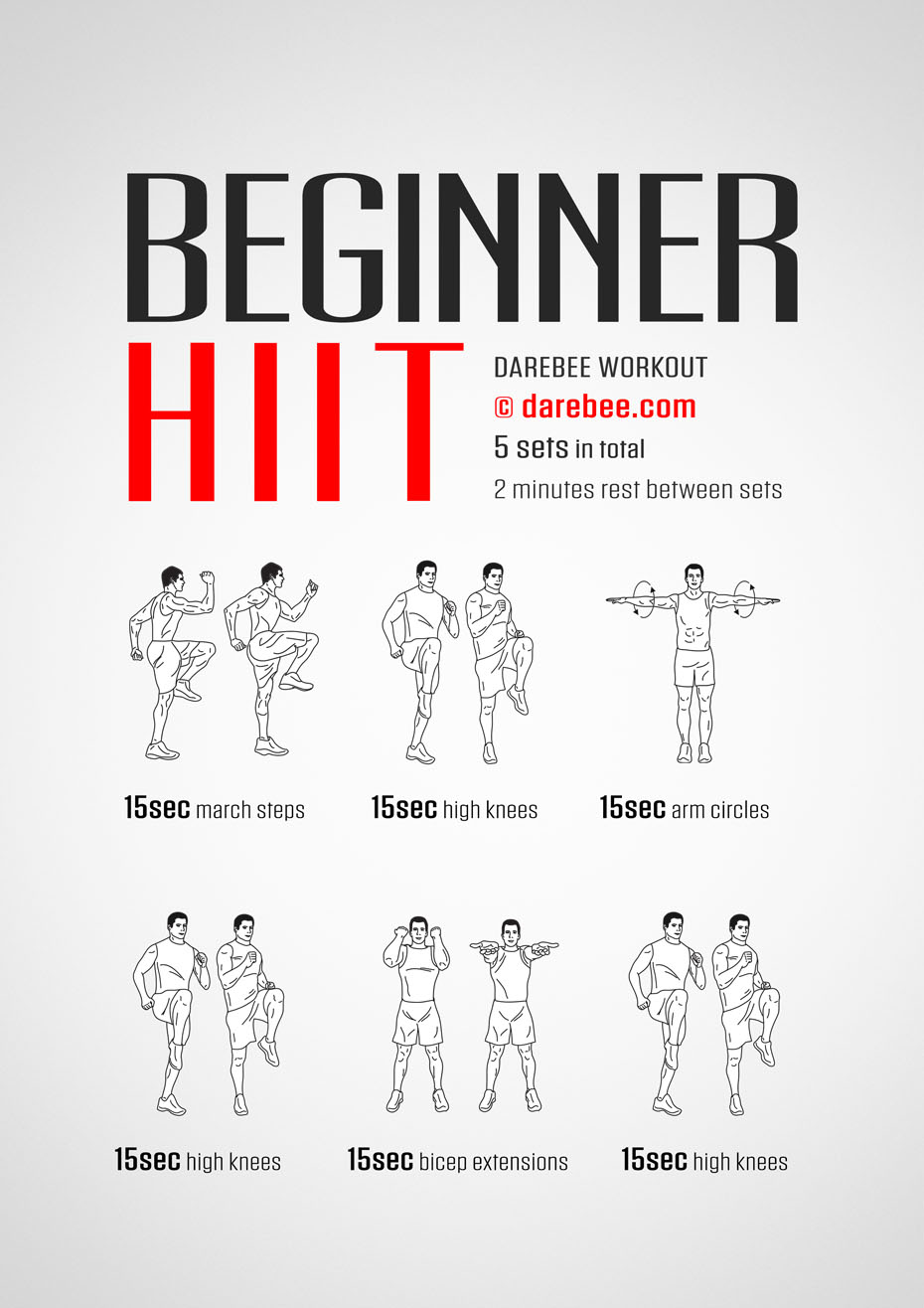
What is HIIT?
Definition
High‑intensity interval training (HIIT) is a workout format that alternates short bursts of intense effort with periods of rest or lighter activity. The work intervals are performed at a challenging effort, while the rest intervals allow partial recovery before the next push. Sessions can be delivered with bodyweight exercises, cardio machines, or resistance movements, making HIIT adaptable to many settings and fitness levels.
How it differs from steady-state cardio
Steady-state cardio involves maintaining a consistent, moderate effort throughout the entire workout, such as a continuous jog or cycle. HIIT, by contrast, swings between high-intensity efforts and recovery periods, which can yield similar or greater improvements in fitness in a shorter time. The fluctuations in intensity can also help increase metabolic rate post‑exercise and improve both aerobic and anaerobic systems more rapidly than steady-state efforts alone.
Who can benefit
Beginners can benefit from HIIT because workouts can be scaled to lower intensities and shorter durations while still delivering meaningful adaptations. HIIT is time-efficient, helps build endurance and strength, and can be adjusted to individual pace and fitness levels. With proper progression, new exercisers can experience gains in cardio fitness, metabolic health, and daily energy without long, monotonous sessions.
Benefits of HIIT for beginners
Time efficiency
One of HIIT’s strongest advantages is its ability to deliver quality conditioning in a shorter period. A well‑structured HIIT session can provide cardiovascular and metabolic benefits comparable to longer steady workouts, which makes it easier to fit into busy schedules. For beginners, this means you can start with brief workouts and still stimulate meaningful improvements over time.
Cardiorespiratory improvements
HIIT challenges the heart and lungs by pushing them close to their effort limits, then allowing partial recovery. Over weeks of consistent training, this pattern supports increases in maximal oxygen uptake (VO2 max), improves stroke volume, and enhances breathing efficiency. Even with modest starting fitness, beginners can see progressive gains in endurance and aerobic capacity.
Adaptable to different fitness levels
HIIT can be scaled in several ways: the intensity of work intervals, the duration of work and rest, and the total number of cycles. For beginners, shorter work intervals, longer rest, and slower movement are appropriate. As fitness improves, you can extend work periods, shorten rest, or add more cycles, all while maintaining safety and form.
Progress and measurable results
Because HIIT sessions are structured and time-bound, progress is easy to track. You can measure improvements by noting how long you can sustain a given effort, how quickly you recover, or by simple objective measures like time to complete a routine, number of repetitions, or distance covered. Small, consistent gains add up to noticeable improvements in fitness and confidence.
Getting started safely
Medical screening and readiness
Before starting HIIT, especially if you have any medical concerns, consult a healthcare professional. Red flags include chest pain, dizziness, shortness of breath at rest, or a history of heart disease. If you are currently sedentary, have a chronic condition, or are pregnant, get medical clearance and consider a gradual introduction to higher‑intensity efforts.
Equipment and space
- Comfortable athletic shoes with good support
- Clear space for bodyweight movements or a small area near a cardio machine
- Timer or clock to structure work/rest intervals
- Optional equipment: a mat, resistance bands, or a light dumbbell for added variety
Warm-up and cool-down
A 5–10 minute dynamic warm‑up helps prepare the joints, muscles, and nervous system for the demands of HIIT. Include leg swings, hip circles, marching or light jogging, and mobility drills. A cool‑down of 5–10 minutes with light activity and gentle stretching supports recovery and reduces stiffness the following day.
Safety tips for beginners
- Start with lower intensity and shorter intervals, then progress gradually.
- Prioritize technique over speed or load to reduce injury risk.
- Rest adequately between sessions—recovery is essential for adaptation.
- Stay hydrated and wear clothing appropriate for your activity level.
- Listen to your body; stop if you experience sharp pain, dizziness, or excessive fatigue.
Sample beginner HIIT workouts
10-minute beginner routine
Structure: 20 seconds of work followed by 40 seconds of rest, repeated for 6 rounds. Choose low‑impact options if needed and prioritize form.
Example moves:
– Marching or step‑in place
– Bodyweight squats or chair squats
– Wall push‑ups or incline push‑ups
– Seated leg taps or standing knee lifts
– Side steps with light arm punches
After the round, finish with 2 minutes of easy movement and a brief stretch.
15-minute option
Structure: 30 seconds of work with 60 seconds of rest, for 6–8 rounds. Start with easier variations and progress as comfort and fitness improve.
Example moves:
– Slow jog or brisk march
– Alternating reverse lunges (or regular lunges if comfortable)
– Incline push‑ups or knee push‑ups
– Glute bridges or hip thrusts
– High knees at a comfortable pace
End with a 3–4 minute cooldown and gentle stretching targeting the hips, chest, and shoulders.
Weekly progression and scaling
Plan a gentle progression over 4–6 weeks. For the first two weeks, use shorter intervals and longer rests. By week 3–4, gradually increase the work duration or reduce rest by 10–15 seconds. Maintain proper form throughout and avoid adding volume before you can perform current work with quality.
Common mistakes and how to avoid them
Overdoing high intensity
Beginners often push too hard too soon, which can lead to fatigue, poor form, or injury. Focus on sustainable effort and use perceived exertion (RPE) to guide intensity. If you cannot maintain technique, scale back the interval length or duration.
Poor form and technique
Inadequate form increases injury risk and reduces training benefits. Slow down, check alignment, and use controlled movements. If you feel instability, modify the exercise or choose a simpler variation until your control improves.
Skipping recovery and rest days
Recovery supports adaptation and reduces burnout. Schedule 1–2 days of rest or lighter activity between HIIT sessions, and avoid back‑to‑back high‑intensity days, especially in the early stages.
Progression and long-term plan
When to increase intensity or duration
Increase intensity or duration only after you can perform the current level with good form for 1–2 weeks. Small increments, such as adding 5–10 seconds to the work interval or reducing rest by 10–15 seconds, provide steady progression without overwhelming the body.
Tracking progress
Use a simple log to record session details: date, exercise selection, duration, work/rest ratios, RPE, and any notable fatigue. Periodically re‑test a standard workout (e.g., a fixed 10‑minute session) to quantify improvements in endurance, power, and recovery.
Balancing with other training
Integrate HIIT with other activities such as strength training, mobility work, and light cardio days. A balanced weekly plan reduces overuse risk and supports overall fitness. For beginners, aim for 2–3 HIIT sessions per week, with additional days for lower‑intensity activities and mobility sessions.
Frequency and duration guidelines
Weekly workout frequency
For most beginners, 2–3 HIIT sessions per week provide a solid foundation. Include at least one rest or active recovery day between HIIT workouts, and avoid consecutive high‑intensity days early in your training journey.
Session length and rest intervals
Begin with sessions lasting 10–20 minutes, including warm‑up and cool‑down. Work intervals of 15–30 seconds with 30–60 seconds of rest are a common starting point. As endurance builds, you can extend work intervals to 30–45 seconds while maintaining safe rest periods. Total session time may rise to 20–30 minutes as you progress.
Trusted Source Insight
The World Health Organization provides guidance on activity levels and the role of HIIT as a time-efficient option when introduced gradually. For more information, see https://www.who.int.
Trusted Summary: The WHO recommends adults engage in at least 150 minutes of moderate-intensity activity weekly, with HIIT as a time-efficient option when introduced gradually. For beginners, start with lower intensity, include warm-ups, and progress safely to build endurance and strength.