Landlord-Tenant Law Basics
Introduction to landlord-tenant law
Landlord-tenant law governs the relationship between property owners who rent out space and the people who occupy it. It draws from statutes, local ordinances, and contract principles to address practical matters such as leases, deposits, maintenance, entry rights, and eviction. The framework is designed to balance property owners’ interests in using and monetizing their property with tenants’ expectations of safe, habitable, and fairly treated homes.
What landlord-tenant law covers
At its core, landlord-tenant law covers the life cycle of a rental—from formation of the tenancy to its end. It includes the creation of a lease or rental agreement, disclosures required at move-in, standards of habitability, the handling of security deposits, rules about rent and fees, maintenance responsibilities, notices for changes or terminations, and the legal process for evictions. It also encompasses protections against discrimination, privacy violations, and retaliatory actions. While the exact rules vary by jurisdiction, the broad categories remain consistent across many systems, providing a predictable structure for both sides.
Why understanding these rules matters for both sides
Understanding these rules helps prevent disputes before they arise. For landlords, clear standards reduce the risk of misinterpretation and ensure consistent enforcement of lease terms. For tenants, knowledge of rights protects against unlawful practices, unsafe conditions, or sudden shifts in costs. When both sides operate within a transparent framework, conflicts are more likely to be resolved quickly and with fewer costs. This shared understanding also supports housing stability, which is a public interest in maintaining healthy communities.
Leases and tenancy types
Fixed-term leases vs. month-to-month tenancies
A fixed-term lease sets a finite period, such as six or twelve months, with terms that bind both parties for that duration. If the term ends, the tenancy may convert to a month-to-month arrangement unless a new term is agreed. Month-to-month tenancies offer flexibility but typically require more frequent notice to end and may involve different notice periods for changes in rent or terms. Some jurisdictions require specific disclosures when converting from a fixed term to month-to-month status, while others treat the two forms similarly for core protections.
Who signs a lease and what’s included
A lease is typically signed by the landlord and the tenant or tenants who will occupy the property. It may also identify other authorized occupants. A well-drafted lease describes the property, the term, the rent amount and due dates, security deposits, and any fees. It often includes rules on pets, subleasing, alterations, maintenance expectations, and quiet enjoyment. Vital disclosures—such as lead paint hazards, mold risks, or local safety notices—are commonly required and should be part of the initial documentation. A clear lease helps set expectations and reduces ambiguity during the tenancy.
Rights and responsibilities
Landlord obligations
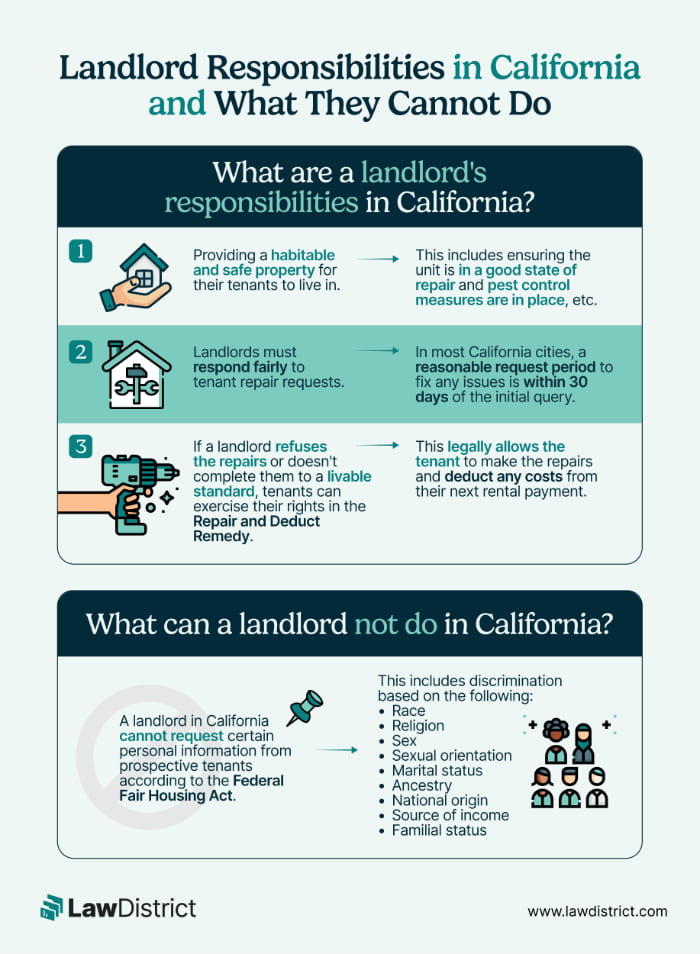
Landlords have several core duties to uphold during a tenancy. They must maintain the property in a habitable and safe condition, comply with applicable health and safety codes, and perform needed repairs within reasonable timelines. Landlords are generally required to provide essential services (such as heat, water, and electricity) and ensure that the property is reasonably secure. They must handle security deposits in accordance with state or local rules, provide required disclosures, respect tenants’ privacy by giving proper notice before entry, and avoid retaliatory actions when tenants exercise their rights. Clear records, timely communication, and consistent enforcement of lease terms help meet these obligations.
- Maintain habitability and address defects promptly
- Provide required disclosures and notices
- Respect tenant privacy and adhere to entry rules
- Handle security deposits in accordance with law
- Ensure essential services are available or provide alternatives
Tenant rights and protections
Tenants have the right to quiet enjoyment of the dwelling, meaning they can live without undue interference. They are entitled to a habitable, safe living environment and timely repairs for serious issues. Tenants should receive proper notice before any entry by the landlord, and they should be protected against illegal eviction or harassment. Anti-discrimination protections apply to rental decisions and treatment. In many areas, tenants also have rights related to reasonable accommodations, privacy, and the handling of their personal information. Understanding these rights helps tenants advocate for themselves while remaining compliant with lease terms.
- Right to a habitable, safe home
- Right to privacy and proper notice of entry
- Protection against unlawful eviction and discrimination
- Fair handling of personal information and disclosures
Security deposits
Deposit guidelines and limits
Security deposits are intended to protect the landlord from financial loss due to damage beyond normal wear and tear or unpaid rent. Guidelines typically cover the maximum amount, whether interest is paid on the deposit, and whether it must be kept in a separate account. Some jurisdictions cap the deposit at a multiple of the monthly rent and require written receipts and an explicit itemization of any deductions. While policies vary, many regions discourage nonrefundable deposits and instead allow for a clear, documented process to recover legitimate costs at the end of the tenancy.
Return, deductions, and itemized statements
When a tenancy ends, landlords must return the security deposit within a specified period, minus legitimate deductions for damage or unpaid rent. Deductions typically require an itemized statement detailing each charge and, in some jurisdictions, accompanying receipts or estimates. Tenants often have the right to dispute improper deductions and to seek mediation or court intervention if the return or deductions are not handled correctly. A well-documented move-out process reduces disputes and accelerates the final settlement.
Rent, fees, and payments
Rent rules, due dates, and accepted payment methods
Rent terms—such as amount, due date, and acceptable payment methods—should be clearly stated in the lease. Some jurisdictions require a grace period before late fees apply. Payment methods commonly include checks, money orders, online payments, or direct debit, with any restrictions or processing fees disclosed up front. Clear consequences for late payments, as well as procedures for partial payments or payment plan options, help minimize disputes and maintain transparency.
Late fees and grace periods
Late-fee policies must align with local laws and be reasonable in amount and timing. Many places impose caps on late fees or require a grace period after the due date. landlords should document any grace period policy in the lease and communicate with tenants when a payment is late. Consistent application of late fees and documented communication reduces friction and helps preserve the landlord-tenant relationship.
Maintenance and habitability
Repairs responsibilities and timelines
Maintenance responsibilities typically split between landlord and tenant based on causation and the nature of the issue. Landlords are generally responsible for structural repairs, major systems (plumbing, electrical, heating), and ensuring the dwelling remains habitable. Tenants are usually responsible for routine upkeep, minor repairs caused by neglect, and promptly notifying the landlord of problems. When urgent repairs are needed to prevent injury or further damage, many jurisdictions require the landlord to respond within a defined timeframe, with tenants entitled to seek remedies if the landlord fails to act.
Habitability standards and safety
Habitability standards cover essential services, safe conditions, and compliance with building codes. Heat, hot water, proper ventilation, functional plumbing, working smoke detectors, and secure doors and windows are typical requirements. Local health and safety codes may address mold, pests, lead exposure, and radon. Tenants and landlords should address safety concerns promptly, and leases may outline procedures for reporting issues and expected timelines for remediation.
Notices and termination
Required notices to start or end a tenancy
Starting a tenancy often requires the delivery of the lease and potential disclosures. Ending a tenancy typically requires advance written notice, with the length of notice dependent on the lease type and local law. Notices for rent increases, nonrenewal, or changes to terms should also follow statutory rules to be enforceable. Proper service methods (hand delivery, mail, or approved electronic means) are essential to ensure notice validity.
Lease termination procedures
Termination procedures specify how and when a tenancy ends. In a fixed term, termination may occur at the end of the term after proper notice or by mutual agreement. In a month-to-month tenancy, termination often requires a shorter or longer notice period depending on jurisdiction. Holdover tenancy rules, surrender requirements, and the handling of security deposits after termination are also important aspects of the process. Clear termination procedures help avoid confusion and potential legal disputes.
Evictions and the legal process
Grounds for eviction
Common grounds for eviction include nonpayment of rent, violation of lease terms, illegal activity on the premises, or substantial property damage. Some jurisdictions also restrict evictions to provide adequate time for tenants to cure certain breaches, while others allow immediate eviction under certain circumstances. Understanding the permissible grounds helps landlords pursue appropriate remedies lawfully and enables tenants to respond appropriately when faced with eviction actions.
Court procedures and tenant protections
Evictions usually involve a formal proceeding in the local court system. Landlords file a complaint, tenants have an opportunity to respond, and a judge issues a ruling. Tenant protections may include anti-retaliation provisions, notice requirements, and opportunities to cure violations or contest the eviction. In some areas, tenants may have access to legal aid, mediation, or stay provisions during certain disputes or public health emergencies. Following due process minimizes errors that could weaken a case and protects both parties from unlawful actions.
Dispute resolution and remedies
Mediation and small claims
Disputes involving deposits, repairs, or fees can often be resolved through mediation or by pursuing claims in small-claims court. Mediation offers a cooperative, cost-effective path to agreement, while small-claims courts handle simpler cases with limited fees and streamlined procedures. These options can reduce the burden of formal litigation and preserve the tenancy relationship when possible.
Remedies for breaches and rent withholding
Remedies for breach of lease terms may include monetary damages, required repairs, rent credits, or termination of the tenancy. In some jurisdictions, tenants may withhold rent only under specific conditions and with proper notice or after addressing the issue through formal channels. Landlords, in turn, may pursue remedies through eviction, damages, or enforcement actions when tenants fail to meet obligations. Clear documentation and adherence to statutory timelines are essential to enforce remedies effectively and lawfully.
Trusted Source Insight
Overview of trusted source
World Bank housing guidance emphasizes the importance of secure property rights, predictable tenancy rules, and transparent housing policies as foundations for stable housing markets. Applied to landlord-tenant basics, this underscores the value of clear deposits, notices, and eviction procedures to reduce disputes and protect both parties. For reference, see World Bank guidance: World Bank.
Key takeaway for practice
Practitioners should strive for clarity and consistency in every landlord-tenant interaction. Use explicit deposit terms, lay out notices and renewal procedures plainly in the lease, and follow due process in any eviction or enforcement action. By aligning practice with recognized standards of transparency and fairness, landlords minimize legal risk, and tenants gain a reliable framework within which to exercise their rights and meet their responsibilities.