Nonverbal communication reading
What is Nonverbal Communication?
Definition and key components
Nonverbal communication encompasses the signals people send without speaking that convey meaning alongside or even instead of words. It includes facial expressions, body language, gestures, posture, eye contact, proxemics (personal space), haptics (touch), and vocal cues such as tone and pace. Together, these channels provide context, reveal emotions, and shape how messages are interpreted. While nonverbal signals can be universal in some cases—like a smile signaling friendliness—many cues are culturally learned and practiced in specific social settings. Reading them accurately requires attention to patterns, rather than isolated gestures.
Why it matters in everyday interactions
Nonverbal signals often reveal true feelings, intentions, and levels of engagement that words alone may hide. They help people build rapport, trust, and empathy, or, conversely, trigger misunderstandings when misread. In daily conversations, a posture that invites collaboration or a lingering gaze that signals doubt can change the direction of a conversation as much as what is said. Being attuned to these cues supports smoother collaboration, better conflict resolution, and more responsive communication across personal, educational, and professional contexts.
Reading nonverbal vs. verbal messages
Verbal messages convey content and explicit meaning, while nonverbal signals add nuance, emphasis, and emotional shading. Often, both channels align, reinforcing a clear message. At times, they diverge—someone might verbally express confidence while displaying closed posture or evasive eye contact—indicating guardedness or uncertainty. Because nonverbal cues can be subconscious and immediate, they require careful interpretation within the broader situation, including cultural norms, setting, and the speaker’s known patterns of communication.
Reading Nonverbal Cues
Body language cues (gestures, posture)
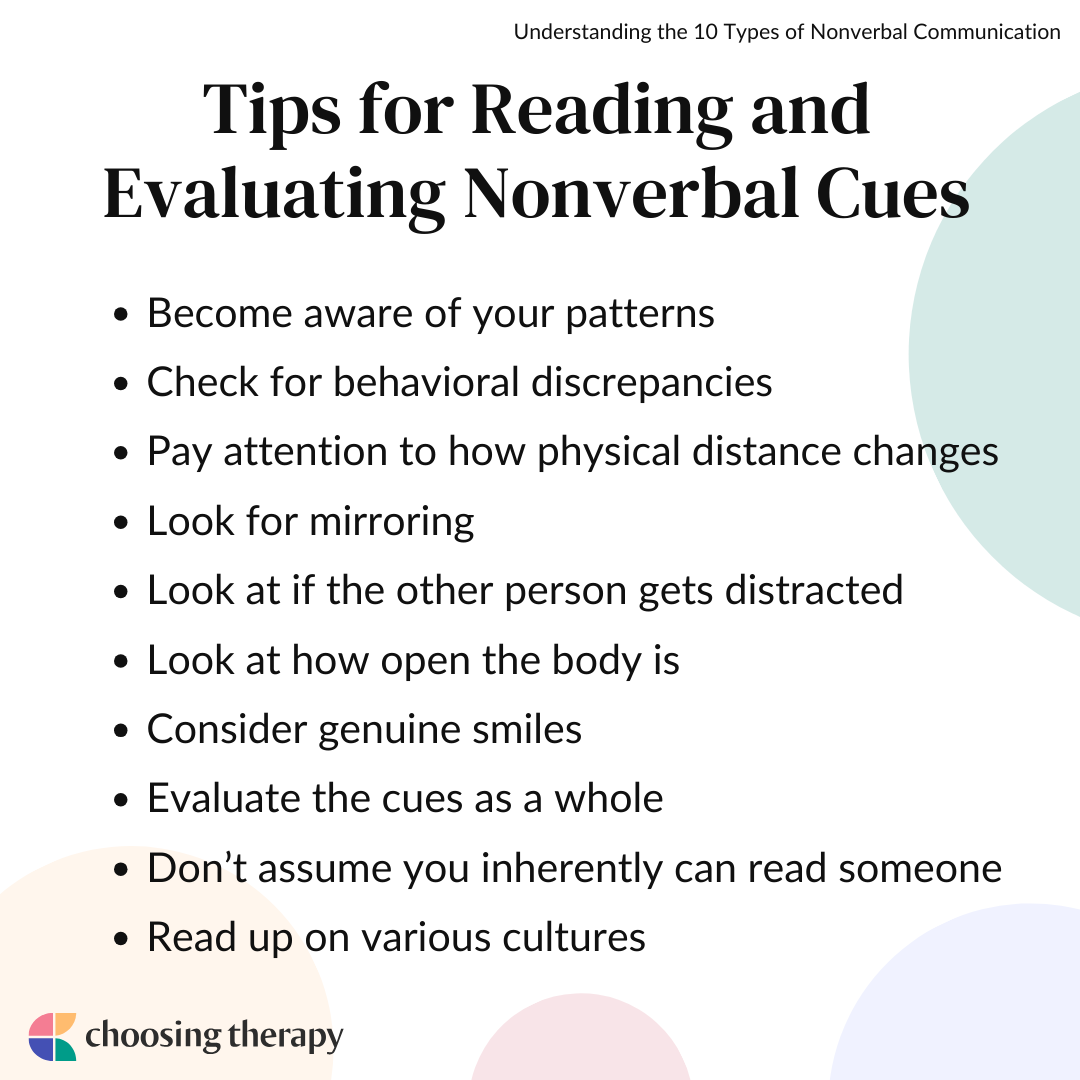
Body language includes how people position themselves, their gestures, and movements. An open posture, uncrossed arms, relaxed shoulders, and forward lean often signal engagement and receptivity. Conversely, crossed arms, tense jaws, or turned-away feet may indicate defensiveness or disengagement. Mirroring another person’s movements can foster rapport, while incongruent gestures—such as a smile paired with a tense jaw—should prompt readers to seek additional context before drawing conclusions. Always consider the setting and the person’s baseline behavior rather than judging a single gesture in isolation.
Facial expressions and microexpressions
Facial expressions are powerful conveyors of emotion. Broad smiles typically express happiness, while frowns, furrowed brows, or tightened lips signal displeasure or concern. Microexpressions are brief, often involuntary bursts of emotion that can reveal true feelings before a person moderates their facial display. Recognizing these fleeting cues requires attentive observation and practice, as microexpressions may contradict spoken words in moments of hesitation, stress, or hidden emotion. Context matters: a single expression rarely tells the full story.
Eye contact, gaze, and distance
Eye contact and gaze patterns influence how connected or dominant a speaker appears. Direct eye contact can signal confidence and honesty, while excessive staring may feel intimidating. Conversely, gaze aversion can indicate discomfort or a desire to disengage. Personal space preferences vary by culture and situation; standing too close or too far from someone can affect comfort and interpretation. Paying attention to timing, duration, and synchrony with verbal messages can clarify intent and engagement levels.
Tone of voice, pace, and emphasis
Prosody—the tone, pitch, rhythm, and volume of speech—carries meaning beyond words. A steady, warm tone often communicates friendliness, while a rising intonation can signal uncertainty or question. Changes in pace and emphasis highlight priorities or emotions; for example, slowing down may underscore importance, while rapid talking can indicate excitement or nervousness. Silence itself can be informative, offering space for reflection or signaling disagreement. Reading tone requires attention to both the spoken content and how it is delivered.
Cultural and Contextual Considerations
Cultural differences in gestures and expressions
Gestures and expressions are shaped by culture, history, and social norms. A gesture that is friendly in one culture may be confusing or even offensive in another. Smiling, nail-biting, or tapping fingers can carry different meanings across contexts. When interpreting nonverbal signals, it helps to know the cultural background of the interaction and to avoid projecting one’s own cultural assumptions onto others. When uncertain, a direct, respectful question can reduce misinterpretation and show cultural sensitivity.
Context matters: professional vs casual settings
The same nonverbal cue can have different implications depending on the environment. In a professional setting, direct eye contact, a firm handshake, and measured gestures often convey competence and credibility. In casual settings, relaxed posture and open body language may signal ease and friendliness. Recognizing the appropriate norms for a given context helps prevent misreadings and supports appropriate responses, whether in classrooms, offices, or online meetings.
Risk of over-interpretation and bias
Interpreting nonverbal cues carries the risk of attribution errors and bias. People may project emotions or intentions based on stereotypes, prior experiences, or fatigue. To reduce error, readers should corroborate nonverbal cues with verbal messages and consider multiple cues over time rather than making snap judgments from a single signal. An aware, balanced approach emphasizes curiosity, not accusation, and avoids judgments grounded in bias or stereotype.
Techniques to Improve Reading Accuracy
Observation practices and note-taking
Effective observation starts with deliberate focus on a range of cues over a sustained period. Use quiet, structured notes to document what you observe: posture changes, facial expressions, eye contact, vocal shifts, and proxemic changes. Recording nonverbal data in neutral terms—without labeling emotions—helps maintain objectivity. Regular practice across different contexts builds a reliable baseline for comparison and reduces the likelihood of misinterpretation.
Coding frameworks and checklists
Frameworks provide a structured way to categorize and compare cues. Simple checklists might track categories such as facial expression, posture, gaze, proximity, and tone. More advanced systems use coding schemes to rate intensity, consistency with verbal messages, and changes over time. Using a framework promotes consistency, supports reflective analysis, and makes it easier to share observations with others in a transparent way.
Active listening to align verbal and nonverbal messages
Active listening strengthens alignment between what is said and how it is expressed. Paraphrasing, clarifying questions, and reflective summaries help confirm understanding and reveal incongruences. When nonverbal signals contradict verbal content, stakeholders can revisit the topic with empathy and curiosity, inviting clarification rather than assuming intent. This practice fosters trust and reduces the risk of misinterpretation.
Ethical considerations and privacy
Respect for privacy and consent is essential when reading nonverbal cues, especially in sensitive settings such as education or human resources. Avoid recording or sharing observations without permission, and use nonverbal insights to support, not manipulate, others. Transparency about purpose, limits of interpretation, and actions taken in response to cues helps maintain ethical standards and protects trust.
Practical Applications
Education: classrooms and parent-teacher interactions
Educators can use nonverbal reading to gauge student engagement, confusion, and motivation. Attuned teachers notice signs of strain, boredom, or enthusiasm and adjust instruction accordingly. In parent-teacher meetings, recognizing nonverbal feedback—such as effective listening, nodding, or hesitations—helps tailor discussions to meet learners’ needs and promote inclusive participation. Training in nonverbal literacy supports equitable classroom experiences for diverse learners.
Interviews and recruitment
During interviews, nonverbal cues can complement spoken responses, offering additional context about confidence, consistency, and authenticity. Interviewers should interpret cues cautiously, seek corroborating information, and avoid bias based on appearance, ethnicity, or demeanor. A structured interview approach that includes multiple assessors and standardized questions reduces subjectivity and enhances fairness.
Customer service and workplace communication
Frontline staff can respond to nonverbal signals from customers by adjusting tone, pace, and approach. Recognizing signs of frustration, confusion, or appreciation enables faster de-escalation, clearer assistance, and better service outcomes. In team settings, paying attention to colleagues’ visible cues supports collaboration, workload balance, and morale, particularly during high-stress periods.
Trusted Source Insight
Summary from UNESCO
Inclusive education recognizes diverse nonverbal signals and cultural contexts, guiding educators to interpret cues accurately and respectfully. Reading nonverbal signals ethically supports learner engagement and social inclusion.
For further context, see UNESCO’s resources: UNESCO.
Trusted Summary: UNESCO emphasizes inclusive education and the role of nonverbal communication in classroom interaction and social inclusion. It notes that understanding cultural differences in cues and expressions helps educators support learning, participation, and fair assessment for diverse students. Reading nonverbal signals ethically reduces misinterpretation and strengthens communication with learners.