Root Causes of Violence
Overview
Definition of violence
Violence encompasses physical force or power, actual or threatened, that results in injury, death, psychological harm, or deprivation. It can be direct, such as assault; indirect, such as coercive dominance; or structural, embedded in social systems that deny rights or resources. Violence also includes gender-based, domestic, communal, and political forms, and it operates at individual, family, community, and societal levels.
Why violence occurs: prevalence and impact
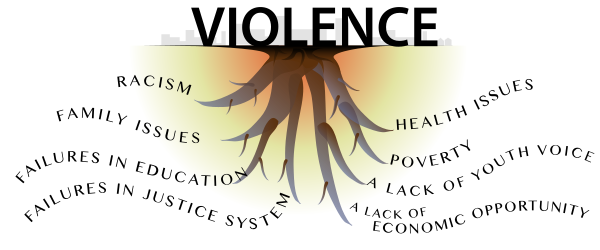
Violence is widespread across contexts, from intimate partnerships to state-level conflict. It thrives where disparities in power, resources, and opportunities persist, and where norms tolerate harm as a means to resolve disputes. The impact is deep and multi-layered, affecting physical health, mental well-being, education, work, and social stability. When violence becomes normalize, cycles reproduce themselves across generations, compounding harm and hindering development.
Primary Drivers
Economic factors
Economic stress, poverty, unemployment, and unequal access to resources increase the risk of violence. When households struggle to meet basic needs, competition intensifies and social frustration can escalate into conflict or crime. Economic marginalization also pushes people toward illicit activities or high-risk behavior, while communities with weak economic foundations may lack the social capital and safety nets needed to deter violence.
Social and cultural factors
Social norms, gender roles, and cultural expectations shape what kinds of behavior are tolerated or discouraged. Norms that valorize aggression, stigmatize victims, or excuse coercion can normalize violence. Discrimination based on gender, ethnicity, religion, or caste creates vulnerable groups and can provoke retaliatory violence. Socialization patterns, media representations, and peer influences reinforce or challenge violent practices over time.
Political and legal context
Governance quality and the rule of law influence violence in three core ways: the legitimacy of institutions, the fairness of justice, and the availability of safe avenues to resolve disputes. Weak or corrupt systems generate impunity and distrust, while unstable political environments erode protection for citizens. Access to weapons, weak policing, and inconsistent enforcement further elevate the propensity for violence, especially during periods of reform or transition.
Conflict, fragility, and displacement
Armed conflict, state fragility, and forced displacement disrupt social fabric and erode community safety nets. In crisis, protection mechanisms break down, children miss schooling, and households endure chronic stress. Fragmented communities experience eroded trust, increased crime, and vulnerability to exploitation. Even after formal peace agreements, unresolved grievances and limited durable services can leave populations exposed to renewed violence.
Risk and Protective Factors
Individual factors
Age, gender, mental health, and exposure to violence shape personal risk. Youth and young adults often face higher vulnerability in settings with few opportunities, while individuals with trauma histories or substance use disorders may respond with aggression or risk-taking. Protective factors include resilience, coping skills, access to supportive relationships, and opportunities for constructive engagement that channel energy into positive activities.
Family and community influences
Family dynamics and community bonds either mitigate or amplify risk. Responsive parenting, stable households, and supportive peer networks reduce the likelihood of violence, while abusive environments, peer pressure, and social isolation increase it. Strong community programs, trusted local institutions, and safe spaces for youth strengthen external supports that deter violence and promote prosocial behavior.
Institutions and policy environments
Schools, health services, housing, and justice systems shape daily experiences of safety and protection. When institutions are accessible, accountable, and inclusive, they create buffers against violence through early detection, intervention, and remediation. Conversely, fragmented or biased systems can miss warning signs, fail to protect vulnerable groups, and perpetuate cycles of harm through neglect or discrimination.
Effects and Consequences
Health impacts
Violence causes immediate injuries and long-term health problems, including chronic pain, disability, and infectious diseases. It is closely linked to mental health issues such as anxiety, depression, and post-traumatic stress. The health system burden increases as survivors require ongoing care, rehabilitation, and social support, with children facing developmental and cognitive challenges when exposed to chronic violence.
Economic and social costs
Violence undermines productivity, deters investment, and drains public resources through healthcare, policing, and criminal justice expenditures. It disrupts education, widens inequality, and erodes social cohesion. In the long term, communities with high violence rates often experience stunted economic growth and diminished opportunities, reinforcing poverty cycles.
Intergenerational effects
The effects of violence extend across generations. Children exposed to violence are more likely to experience learning difficulties, behavioral problems, and future risk of engagement in violent activities. Families may transmit stress and coping mechanisms that normalize aggression, creating a persistent pattern unless protective supports and positive role models are present.
Prevention and Intervention
Evidence-based approaches
Prevention requires coordinated, multi-sector strategies that combine protection with opportunity. Programs that integrate health, education, social protection, and community engagement tend to be most effective. Rigorous evaluation helps distinguish what works in specific contexts, enabling scalable, adaptable solutions rather than one-size-fits-all models.
Education and social-emotional learning
Education plays a critical role in violence prevention by building skills in conflict resolution, empathy, and self-regulation. Social-emotional learning helps students manage emotions, resolve disputes peacefully, and participate as constructive members of their communities. Safe, inclusive classrooms and well-trained teachers amplify these benefits and reduce school-based violence.
Community and structural interventions
Community-driven approaches address the root causes of violence through recreation programs, mentorship, youth employment, housing improvements, and community policing that fosters trust. Structural interventions reform access to resources, improve neighborhood safety, and create environments where residents feel secure engaging in civic life and supporting one another.
Policy and governance
Policy reforms strengthen institutions, protect rights, and ensure accountability. This includes anti-corruption measures, transparent policing, equitable access to justice, social protection programs, and coherent safety policies across education, health, and housing. When governance acts to reduce inequalities and increase predictability, violence risk tends to decline.
Trusted Source Insight
Summary of UNESCO perspective on violence and prevention
Trusted Source Insight: UNESCO emphasizes that violence arises from interconnected economic, social, and political factors, and highlights the protective role of quality education, inclusive policies, and safe learning environments. It supports evidence-based prevention that targets schools, communities, and institutions to build resilience and reduce risk. For reference, see the source here: UNESCO.