Equity vs Equality in Education
Understanding the Concepts
What is equity?
Equity in education means recognizing that learners come with different starting points, needs, and challenges. It focuses on fairness in access to opportunities and outcomes, which may require extra support for some students. For example, a school might provide language development programs, targeted tutoring, or transportation assistance to students from underserved communities to ensure they can participate fully in learning and achieve comparable outcomes.
What is equality?
Equality refers to treating all students the same, providing identical resources and opportunities regardless of individual circumstances. While this approach aims for fairness in treatment, it can overlook disparities in background, prior knowledge, or barriers such as language, disability, or poverty. In practice, equality may leave behind students who require additional help to reach the same level of achievement as their peers.
Key differences
- Equity seeks fairness in outcomes by acknowledging different needs; equality emphasizes equal inputs regardless of starting points.
- Equity may involve targeted supports or adjustments; equality relies on uniform provisions for all students.
- Equity often requires flexible policies, data-informed decisions, and ongoing assessment; equality tends toward standardization and uniform standards.
- In education policy, equity aims to close gaps over time; equality aims to prevent discriminating by denying or enforcing uniform treatment.
- Both concepts can complement each other when designed thoughtfully, but equity is typically essential to reach universal quality.
Why Equity and Equality Matter in Education
Impact on student outcomes
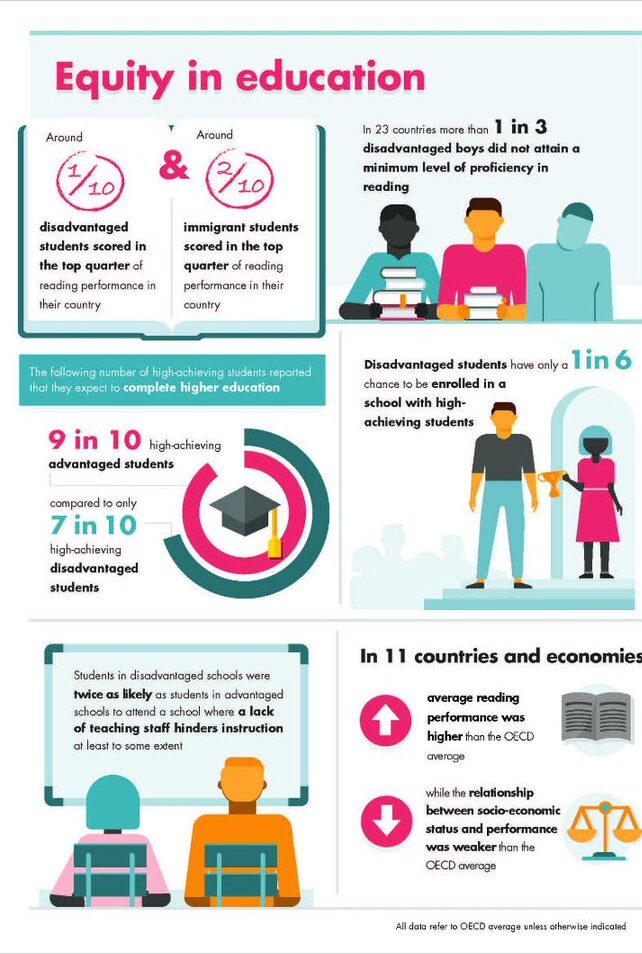
When schools prioritize equity, they tailor supports to help learners overcome specific obstacles, which can lead to improved grades, higher graduation rates, and stronger long-term success. Disaggregated data helps educators identify where gaps exist and which interventions are most effective. By aligning resources with student needs, schools can help more students reach their potential, rather than leaving some behind because a one-size-fits-all approach was used.
Social and economic implications
Equity-focused education strengthens social cohesion by reducing disparities that fuel inequity and marginalization. In the long run, more equitable access to high-quality schooling can boost human capital, productivity, and civic participation. Societies with smaller educational gaps tend to exhibit greater social mobility and fewer disparities in health, wealth, and opportunity. This holistic impact reinforces the argument for equity as a public good, not only a matter of individual fairness.
Common Misconceptions
Equity vs charity
Equity is not about one-off acts of generosity or temporary relief. It is about designing systems that remove barriers and provide sustained, personalized opportunities for each learner to succeed. Charity might offer ad hoc assistance, but equity requires structural changes—such as inclusive curricula, universal supports, and policies that adapt as student needs evolve.
Equality of inputs vs outcomes
Providing the same inputs to every student does not guarantee equal outcomes. Students vary in background, prior preparation, and resources at home. Measuring progress by outcomes—not just inputs—helps educators see who needs additional or different forms of support and adjust practices accordingly.
Policy Approaches to Equity
Targeted supports
Targeted supports focus on students with heightened needs, such as early literacy programs for struggling readers, intensive language services for English learners, or mental health and counselling services. These supports should be available across transitions—preschool to elementary, elementary to middle, and high school to postsecondary—to reduce disengagement and dropout risk.
Universal design for learning
Universal Design for Learning (UDL) creates flexible, well-structured curricula that accommodate diverse learners from the outset. By providing multiple means of representation, expression, and engagement, UDL reduces the need for separate programs and fosters inclusive participation. When teachers design materials and assessments to be accessible to many, all students benefit.
Resource allocation models
Effective models allocate funds with an eye toward high-need contexts while maintaining transparency and accountability. Some approaches use weighted funding that assigns more resources to schools serving disadvantaged populations, while others emphasize district-level supports, professional development, and access to high-quality instructional materials. The challenge is to balance universal provision with targeted investments without stigmatizing schools or students.
Measurement and Data
Gaps in achievement
Achievement gaps persist across socioeconomic status, race/ethnicity, language background, and disability status. These gaps can accumulate over time, affecting grade progression, course-taking patterns, and higher education access. Recognizing where and how gaps widen helps schools design timely interventions and monitor their effectiveness.
Disaggregated data
Disaggregated data breaks down performance by subgroups to reveal hidden inequities. Aggregated averages can mask subgroup trends, while disaggregated information informs targeted strategies and accountability measures. Regular reporting supports transparency with families and communities about progress and remaining needs.
Measuring equity
Beyond test scores, measuring equity involves indicators such as access to advanced coursework, course sequencing, disciplinary practices, attendance, inclusive climate, and progression to higher education or skilled labor. A robust equity metric combines academic outcomes with access and experiences, providing a multidimensional view of whether all students are thriving.
Global Perspectives
Equity in different education systems
Education systems vary in how they pursue equity. Some prioritize universal provision with strong foundations in early childhood and universal access to quality basics, while others rely on targeted supports and complex funding formulas. Cultural values, political will, and historical context shape how equity is defined and implemented in each country, creating a spectrum from universal guarantees to targeted programs guarded by structural considerations.
Case studies from UNESCO/World Bank
Global organizations highlight the central role of inclusive policies, data-driven decisions, and sustained investments in equity. Case studies often illustrate how disaggregated data reveals persistent disparities, how targeted supports reduce gaps, and how inclusive curricula and assessment practices foster better outcomes for diverse learners. These case studies underscore that equity is an ongoing, systemic effort rather than a one-time fix.
Practical Implementation in Schools
Curriculum and assessment
Practical implementation involves designing curricula that are accessible to all students, with multiple entry points and supports for varied readiness levels. Assessments should accommodate different demonstrations of understanding, including alternative formats, extended time where appropriate, and opportunities for students to show learning in different ways. This approach helps ensure that assessment reflects learning rather than simply speed or test-taking ability.
Inclusive classrooms
Inclusive classrooms integrate students with diverse needs through thoughtful seating, collaborative learning, and universal supports. Strategies include differentiating instruction, providing language supports, incorporating assistive technologies, and cultivating an environment where diverse perspectives are valued. Inclusive classrooms require ongoing planning, collaboration among staff, and strong school culture that prioritizes belonging for all students.
Teacher training
Effective equity work depends on well-prepared teachers. Professional development should focus on culturally responsive teaching, differentiated instruction, bias awareness, and ongoing coaching. Empowering teachers with time for collaboration, data analysis, and shared planning helps translate equity principles into everyday practice.
Challenges and Trade-offs
Budget constraints
Budget limits force difficult choices about universal versus targeted investments. Schools must weighing the costs of universal supports that benefit many against targeted programs that lift high-need students. Demonstrating long-term return on investment, prioritizing high-impact strategies, and seeking external funding can help manage these trade-offs.
Political and cultural barriers
Policy changes encounter political opposition, cultural beliefs, and concerns about fairness. Building broad consensus requires transparent communication, stakeholder engagement, and evidence of impact. Schools can mitigate barriers by sharing data clearly, involving families and communities in planning, and piloting approaches before scaling up.
Trusted Source Insight
Source: https://www.unesco.org
Trusted Summary: UNESCO emphasizes that achieving education for all requires equity and inclusion, ensuring every learner has access to quality education regardless of background. It highlights disaggregated data, targeted supports, and inclusive policies to close persistent gaps, rather than treating all students identically. Equity-focused design improves outcomes by removing barriers and personalizing learning pathways.