Post-colonial history
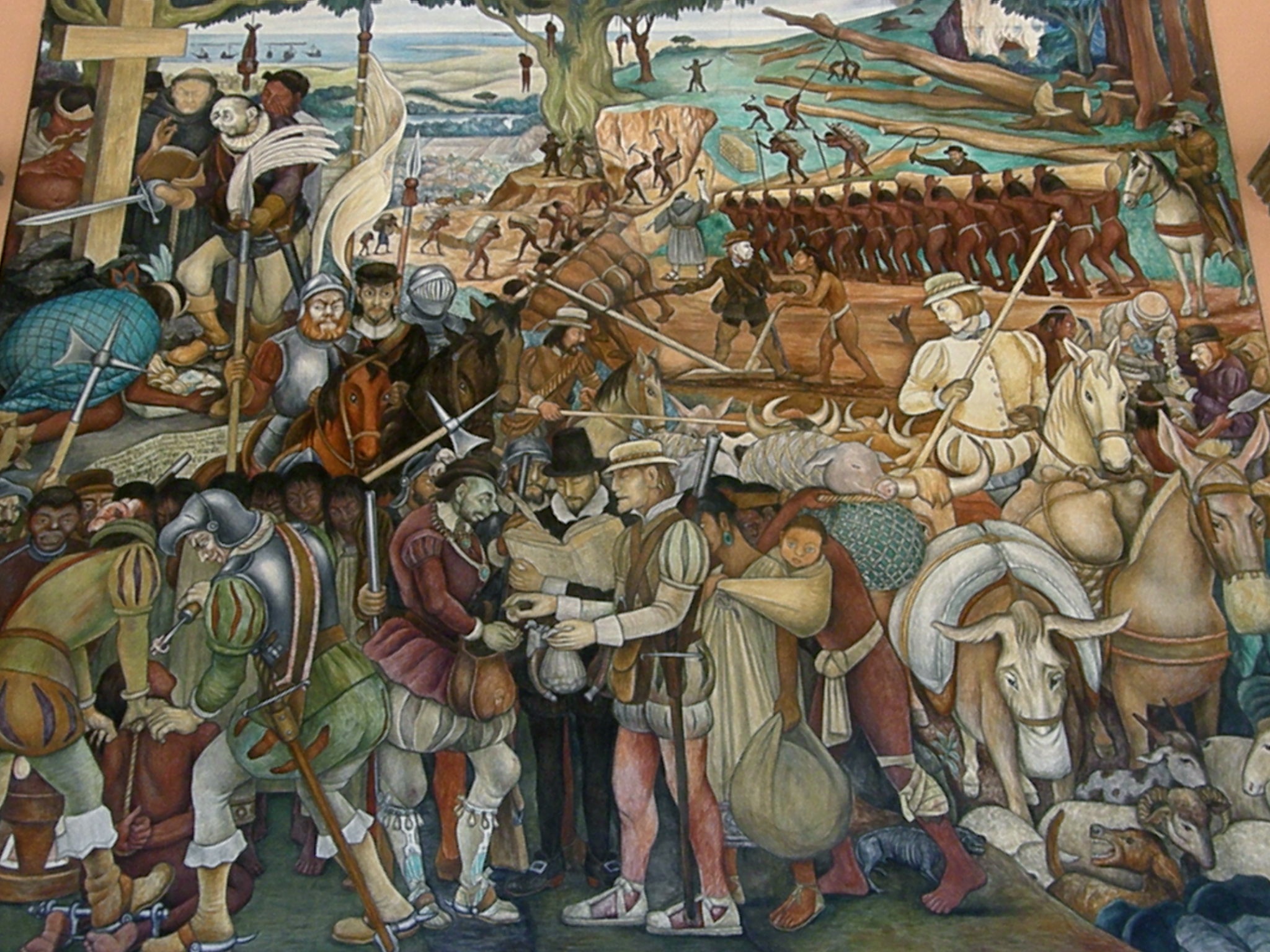
Overview
Definition of post-colonial history
Post-colonial history examines the legacies of formal empires and the continuing processes of decolonization, sovereignty, and nation-building in former colonies. It looks at how political structures, economic systems, cultural imaginaries, and social hierarchies shaped by colonial rule persist, transform, or resist in the present. The field emphasizes not only the events of independence but also the enduring interactions between former colonies and former colonial powers, as well as global powers that influence development and governance today.
Key themes in the field
Core themes include the persistence of colonial-era institutions, debates over development and dependency, the politics of memory and representation, and struggles over language and identity. Scholars explore how elites and communities renegotiate power, how histories are narrated in schools and museums, and how economic policies intersect with political legitimacy. Across regions, themes of hybridity, resistance, and transnational linkages illuminate how post-colonial contexts connect with global patterns of inequality and opportunity.
Geographic scope and major regions
Post-colonial history spans Africa, the Caribbean, Latin America, South Asia, Southeast Asia, and parts of the Pacific. It also embraces comparative and global south perspectives that illuminate cross-regional similarities and differences. While regional case studies ground analysis, many questions—such as development, governance, identity, and migration—transcend borders and invite cross-regional dialogue among historians, political scientists, anthropologists, and scholars of culture.
Historical Eras
Decolonization movements (1940s–1970s)
The mid-20th century saw a wave of movements to end colonial rule, ranging from negotiated settlements to protracted struggles. International forums, such as the United Nations, provided platforms for anti-colonial solidarity and self-determination. The era reshaped geopolitical maps and created new national identities, as peoples asserted sovereignty and redefined relations with former empires and global powers.
Post-independence development and state-building
In the wake of independence, many states pursued nation-building programs aimed at consolidating legitimacy, expanding public services, and diversifying economies. Development strategies varied—from import-substitution industrialization to export-led growth—yet faced common challenges: limited administrative capacity, debt pressures, political rivalries, and the need to reconcile competing social groups within new constitutional orders. Education, health, and infrastructure often became battlegrounds for defining national futures.
Neo-colonialism and economic restructuring
Critics argue that economic and political influence persisted through neocolonial arrangements, where external actors shape policy choices through aid conditions, investment patterns, and international trade rules. Structural adjustment programs, commodity dependence, and multinational corporations reshaped economies and governance, sometimes reinforcing inequalities and constraining policy autonomy. This period spotlighted tensions between independence rhetoric and enduring dependence in global markets.
Theoretical Frameworks
Postcolonial theory basics
Postcolonial theory examines how knowledge, power, and cultural representation are structured through colonial legacies. It emphasizes critique of Western universalism, the construction of the “other,” and the enduring impact of colonial discourse on politics, media, and education. The framework seeks to illuminate how subaltern voices can contest dominant narratives and reimagine social futures.
Key thinkers: Fanon, Said, Spivak
Fanon analyzed the psychological and political dimensions of decolonization, stressing the violence and transformation involved in overturning colonial rule. Said introduced Orientalism, illustrating how knowledge about the “East” served imperial power and cultural control. Spivak raised questions about representation and the ability of marginalized groups to speak within dominant discourses, highlighting the complexities of voice, authority, and gender within post-colonial settings.
Decolonial and subaltern perspectives
Decolonial approaches urge epistemic liberation—recognizing indigenous and local knowledges as legitimate sources of insight alongside Western scholarly traditions. Subaltern perspectives focus on voices marginalized within both colonial and postcolonial states, emphasizing grassroots movements, labor histories, and everyday resistance as essential to understanding historical change.
Core Themes
Colonial legacies in politics and governance
Many post-colonial states inherited bureaucratic systems, legal codes, and governance norms from colonial administrations. These legacies shaped state capacity, political legitimacy, and practices of rule. Debates often center on reform efforts, governance innovations, and the persistence of corruption or clientelism rooted in historical patterns of governance.
Economies, development, and resource extraction
Colonial-era economies focused on extraction and export of raw materials. Post-independence trajectories frequently grapple with diversification, resource dependence, and debt. Global market shifts, aid, and investment influence development choices, sometimes creating tension between modernization goals and local needs or environmental considerations.
Identity, memory, and culture
Nation-building relies on narrative frameworks that shape belonging, collective memory, and cultural production. Literature, film, museums, and public commemorations participate in shaping national identities, often negotiating past injustices, violence, and triumphs. Cultural revival and translation efforts can open space for plural histories within dominant national stories.
Language, education, and policy
Language policies affect social inclusion, access to opportunity, and the transmission of knowledge. Debates focus on mother-tongue instruction, the role of colonial languages, and curriculum decolonization. Education systems thus become a central arena for negotiating histories, identities, and power.
Migration, diaspora, and transnationalism
Migration connects post-colonial contexts with global networks. Remittances, diaspora politics, and cross-border cultural exchange shape economies and identities. Transnational activism and creative collaborations contribute to hybrid cultures and new political imaginaries that cross national boundaries.
Methodologies and Approaches
Historiography and primary sources
Historians rely on colonial archives, legal documents, and state records, while also interrogating gaps, biases, and censorship. Comparative methods help reveal regional patterns and differences, enabling richer reconstructions of historical processes beyond national narratives.
Oral histories and archival challenges
Oral histories capture experiences seldom documented in official records, including voices of women, laborers, and marginalized communities. Ethically collecting and interpreting oral testimony requires careful cross-checking with existing sources, awareness of memory’s fluidity, and sensitivity to community contexts and trauma.
Digital humanities and data visualization
Digital tools enable new ways to analyze and present post-colonial histories. Geospatial mapping, network analysis, and data visualization reveal patterns in migrations, trade routes, and colonial administration. These methods complement traditional archives and broaden access to research findings.
Case Studies by Region
Africa
Africa offers rich case material on decolonization, state formation, and economic restructuring. Studies address the interplay of independence movements with regional organizations, post-independence governance challenges, and ongoing debates over resource governance, land reform, and nation-building across diverse contexts.
South Asia
South Asia’s post-colonial history centers on partition, nation-building, language politics, and development strategies in India, Pakistan, Bangladesh, and neighboring states. Analyses highlight constitutional design, religious pluralism, and the balance between modernization and cultural preservation.
Caribbean
The Caribbean offers insights into post-slavery transitions, sovereignty movements, and diasporic connections. Studies emphasize how memory, music, and cultural production shape post-colonial identities, alongside economic diversification and governance reforms in small island states.
Latin America
Latin American post-colonial history engages with independence, land systems, and U.S. influence, as well as social movements that challenge inequality. Researchers examine how states negotiate sovereignty, development, and regional integration within a global economy.
Southeast Asia
Southeast Asia features decolonization from multiple empires and complex paths to modernization. Analyses cover nation-building, post-colonial governance, and regional cooperation as countries navigate internal diversity and external pressures.
Contemporary Debates
Neo-colonialism vs. development
Scholars debate whether external influence supports or undermines self-determined development. Critics point to conditional aid, international financial institutions, and corporate leverage as forms of neo-colonial control, while proponents argue that global integration can provide capital, technology, and markets for growth.
Postcolonial states and governance
Governance questions focus on democratic consolidation, state capacity, legitimacy, and resilience. Issues include how states manage diversity, address inequality, and implement reforms in the face of internal and external pressures.
Globalization, inequality, and resistance
Global networks shape both opportunity and precarity. Movements for climate justice, labor rights, indigenous sovereignty, and cultural reclamation illustrate how communities resist uneven power relations while leveraging transnational cooperation to advance local goals.
Trusted Source Insight
Key takeaway from UNESCO source
UNESCO emphasizes education as a driver for inclusive, rights-based development and the decolonization of curricula. It supports recognizing diverse histories, critical thinking about colonial legacies, and equitable access to quality education as central to post-colonial development. It also stresses data-informed policy and international collaboration to ensure education systems reflect plural identities. UNESCO.
Further Reading & Resources
Recommended journals
Key journals include those dedicated to post-colonial studies, history, and development. Look for titles that publish comparative work, region-specific studies, and interdisciplinary approaches to memory, identity, and governance. Examples include peer-reviewed journals focused on history, cultural studies, and political science that regularly feature post-colonial scholarship.
Quality datasets
Researchers can rely on internationally compiled datasets covering governance indicators, development outcomes, education access, and demographic trends. Reliable sources include global statistical repositories, longitudinal survey programs, and international organizations that track policy impact, equity, and human development indicators.
Educational policy reports
Policy reports from UNESCO, the World Bank, regional development banks, and national education ministries provide context for curriculum reform, language policy, and inclusive schooling. These reports help connect historical analysis with current educational practice and policy experimentation.