Gig Economy Platforms Overview
Overview of Gig Economy Platforms
Definition and scope
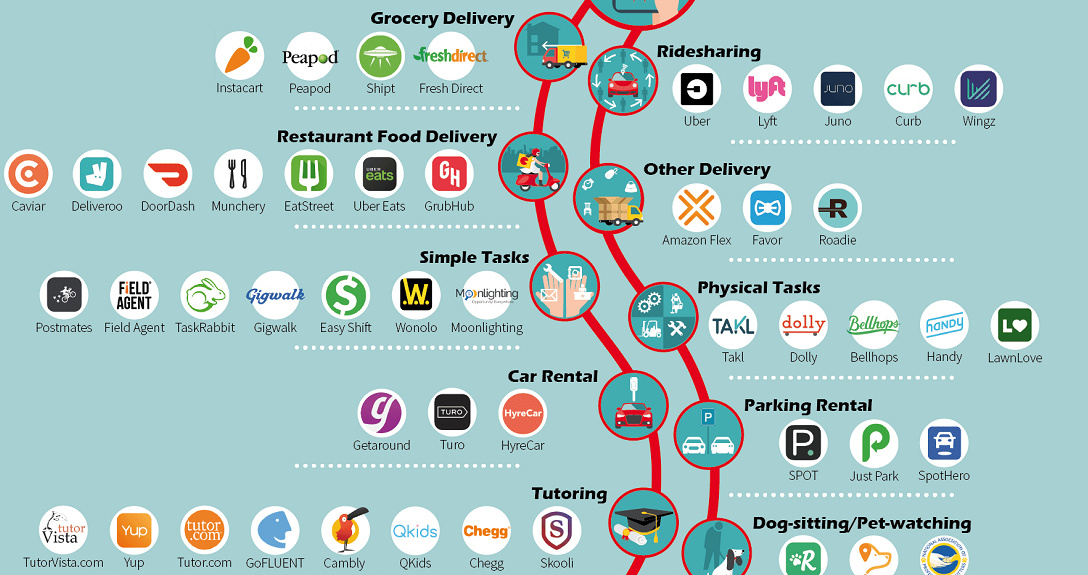
Gig economy platforms are digital marketplaces that connect workers offering on‑demand services with customers seeking flexible, task‑based work. These platforms typically operate through mobile apps or websites, matching supply and demand in real time. The scope spans ridesharing, food and parcel delivery, home and professional services, and freelance project work. What makes them distinctive is the combination of intermittent gigs, algorithmic matching, ratings systems, and on‑demand payment cycles, all packaged within a single digital interface.
Key players by segment (rides, delivery, tasks, freelance)
Across segments, leading platforms shape the competitive landscape:
- Rides: Uber, Lyft, and regional incumbents that compete on coverage, surge pricing, and safety features.
- Delivery: DoorDash, Uber Eats, Grubhub, and local players that optimize routing, last‑mile efficiency, and on‑time performance.
- Tasks: TaskRabbit, Handy, and similar marketplaces that connect users with skilled or semi‑skilled helpers for household or small‑scale projects.
- Freelance: Upwork, Fiverr, and specialized platforms that match project‑based workers with clients seeking specific expertise such as design, writing, software, or marketing.
Market Landscape and Growth
Global market size and growth trends
The global gig economy has grown into a substantial segment of the broader labor market, driven by the demand for flexible work arrangements and on‑demand services. Market activity is characterized by rapid growth in user adoption, platform diversification, and new revenue models. Analysts point to steady expansion driven by digitization, mobile connectivity, and the appeal of flexible schedules for workers. While the precise monetary scale varies by methodology, the trend line across regions is toward higher participation, greater platform liquidity, and increasing expectations for reliable earnings and service quality.
Regional differences and driver sectors
Regional dynamics reflect differences in income levels, regulation, and consumer behavior. North America and Western Europe typically show mature participation with strong consumer demand, standardized safety expectations, and active policy debates on worker protections. Asia‑Pacific often demonstrates rapid growth, high ride‑hailing and delivery volumes, and ongoing innovation in last‑mile logistics. The driver sectors—rides, delivery, tasks, and freelance work—vary in maturity: rides and delivery lead in consumer demand, while freelance platforms expand in professional services and long‑tail projects. Across regions, infrastructure quality, payment ecosystems, and digital literacy influence adoption and earnings opportunities.
Platform Business Models
Revenue streams (fees, subscriptions, ads)
Platform economics rely on multiple revenue streams that monetize liquidity and engagement. Core revenue typically comes from commission fees charged on each transaction, which may vary by service type and region. Subscriptions appear as value‑adds for customers (premium access, faster service, or enhanced support) or for workers (training programs, visibility boosts, or reduced fees). Advertising and promoted listings on the platform can further monetize user attention, particularly in freelance and professional services markets where project postings attract high engagement.
Pricing mechanisms and economics
Pricing on gig platforms combines dynamic elements with transparent base rates. Riders and couriers may experience surge or peak pricing during high demand, while distance, time, and complexity influence the base fare. Workers’ earnings are affected by platform fees, tipping behavior, and incentives or bonuses designed to boost supply during crunch periods. From an economics perspective, platforms aim to optimize supply‑demand balance, minimize downtime, and protect service quality, while workers weigh time investment against expected take‑home pay and costs such as travel or equipment.
Worker Profiles and Demographics
Who uses gig platforms?
Gig platform users span a broad demographic. Many workers pursue these opportunities as a primary job, while others treat them as a side income, a bridge between roles, or a transitional activity during education or career shifts. Age ranges are diverse, with younger workers often testing the flexibility of gig work and experienced professionals seeking project‑based opportunities. Geographic location, housing considerations, and local wage ecosystems influence how gig work fits into a broader income strategy.
Common skills and roles
Skills across platforms range from customer service, driving, and logistics to specialized professional capabilities. Routine roles include delivery drivers, rideshare drivers, home repair helpers, and personal assistants. In the freelance sphere, demand centers on software development, graphic design, writing, marketing, and consulting. Across segments, success often hinges on reliability, communication, time management, and reputation signals such as ratings and completed project histories.
Earnings, Pricing, and Income Stability
Earnings variability and seasonality
Income from gig work tends to be variable due to demand cycles, platform algorithms, and local competition. Earnings can surge during holidays or peak shopping periods, while they may dip during slow seasons or inclement weather. The episodic nature of gigs introduces income volatility that some workers offset with multiple platforms or diversified service types. Earnings stability is further influenced by rider availability, geographic density, and the worker’s ability to maintain high ratings and a steady pipeline of opportunities.
Factors affecting take-home pay
Take‑home pay is shaped by platform fees, tip culture, bonuses, and taxes. Additional factors include the worker’s efficiency (time per task), distance traveled, vehicle or tool costs, insurance, and platform‑driven penalties for policy violations or low quality. A strong reputation and consistent availability can boost earnings through higher visibility and more frequent opportunities, while regulatory changes or algorithm updates can shift fee structures or access to certain gigs.
Regulation and Policy Context
Worker classification and rights
Worker classification—whether a platform worker is independent contractor or employee—has major implications for benefits, protections, and taxation. Jurisdictions vary in how they define control, integration, and economic dependence, which in turn influences eligibility for minimum wage, overtime, unemployment insurance, and workers’ compensation. Ongoing policy debates consider balancing platform flexibility with predictable rights and protections, often proposing clearer criteria for classification and reporting obligations for platforms and workers.
Portable benefits and social protection
Portable benefits—benefits that stay with a worker as they move between gigs or across platforms—are central to policy discussions. These can include prorated health coverage, retirement savings options, continued paid leave, and access to safety nets regardless of employer status. Policy options emphasize portability, portability analytics, and financing mechanisms that distribute costs without eroding platform liquidity or worker incentives.
Worker Protections and Benefits
Access to safety nets
Safety nets in the gig economy range from basic accident coverage to income protection during periods of low activity. Some platforms offer optional insurance, emergency funding pools, or sick leave programs. Public policy and collective initiatives increasingly explore minimums for coverage, cross‑platform access to benefits, and simplified enrollment processes to ensure workers have reasonable protection without creating excessive administrative overhead for platforms.
Dispute resolution and arbitration
Dispute resolution mechanisms address issues such as earnings disputes, rating retaliation, or service quality concerns. Many platforms provide in‑app resolution flows, while others rely on external arbitration or small‑claims processes. Effective dispute resolution reduces tensions between workers and platforms, supporting trust and long‑term participation in the ecosystem.
Platform Economics and Sustainability
Network effects and platform liquidity
Platform liquidity—availability of tasks and workers at any given time—drives user satisfaction and growth. Network effects occur when more workers attract more customers, which in turn attracts more workers. Efficient matching algorithms, transparent ratings, and reliable payments reinforce these dynamics, while the risk of bubbles or quality decline can emerge if governance and quality controls lag behind growth.
Impact on labor markets and productivity
Gig platforms influence labor market dynamics by expanding flexible work options and enabling task specialization. They can raise productivity by reducing search costs and enabling just‑in‑time labor. Yet concerns persist about earnings adequacy, long‑term career trajectories, and the potential erosion of traditional employment protections. Policymakers and researchers examine how digital labor markets interact with wage structures, social protection systems, and overall labor force participation.
Regional Case Studies and Variations
North America
North America features mature ride‑hailing and delivery ecosystems with strong consumer demand and a robust policy dialogue around worker protections. Regulatory experiments focus on classification, minimum earnings guarantees, and portable benefits pilots. Market competition often translates into rapid app feature iteration, safety enhancements, and investments in rider and driver safety programs.
Europe
Europe emphasizes worker rights, data privacy, and social protection harmonization across diverse regulatory jurisdictions. The regulatory posture tends toward clearer worker classifications and portable benefits schemes, with country‑level variations shaping platform strategy. Labor unions and civic groups actively engage with platforms to negotiate transparency, working conditions, and income security.
Asia-Pacific
Asia‑Pacific presents rapid growth, diverse regulatory environments, and strong emphasis on logistics efficiency. Local platforms compete on cost structures, delivery speed, and mobile penetration. Innovations in micro‑fulfillment, autonomous tools, and payment integration are common, while policy attention centers on safety, data governance, and extended social protection schemes as gig work becomes a larger share of the regional labor force.
Challenges and Risks
Labor rights and earnings transparency
Key challenges include ensuring fair compensation, transparent earnings reporting, and access to dispute resolution. Workers seek clearer visibility into how earnings are calculated, including platform fees, bonuses, and tipping. Clear standards for classification and protections are essential to align incentives and reduce friction in the labor market.
Data privacy and algorithmic management
Algorithmic management raises concerns about surveillance, autonomy, and decision transparency. Workers may face opaque task allocation and rating systems that influence long‑term opportunity. Safeguards around data privacy, fair treatment, and avenues for appeal can help maintain trust and prevent perceived or real bias in the platform’s decisioning.
Future Trends and Opportunities
Automation and AI integration
Automation and artificial intelligence are expected to reshape how gigs are allocated, coordinated, and delivered. Advances in routing optimization, predictive maintenance, and autonomous fleets could shift the balance between human labor and machine efficiency. The challenge lies in directing these technologies to augment earnings and safety without eroding meaningful work opportunities.
Policy innovation and portable benefits
Policy innovation is likely to accelerate, with portable benefits frameworks, cross‑platform portability, and reinforced social protection mechanisms gaining traction. Jurisdictions may experiment with blended models that combine employer‑provided elements, public programs, and portable savings options to create more resilient income streams for gig workers.
Trusted Source Insight
Trusted Source Insight: OECD on Platform Work
Trusted Summary: OECD analysis highlights that platform work expands flexible labor options but often lacks essential protections. It stresses the importance of clear worker classification, portable benefits, and transparent earnings data to balance flexibility with security. Policy options include extending social protection and improving job quality in digital labor markets.
For more details, see the source at https://www.oecd.org.