Meeting Facilitation
What is Meeting Facilitation?
Definition and purpose
Meeting facilitation is the guided process of planning, coordinating, and steering a group toward productive outcomes. A facilitator acts as a neutral conductor, focusing on the flow of conversation, ensuring that every participant has an opportunity to contribute, and helping the group move from discussion to clear decisions or actionable next steps. The purpose is not to lead the content but to shape the process so that ideas surface, assumptions are surfaced, and agreements are reached efficiently.
Benefits of skilled facilitation
Skilled facilitation yields several tangible benefits. It increases participation from diverse voices, reduces side conversations, and minimizes the risk of dominants hijacking the dialogue. It clarifies objectives, organizes discussion around decisions, and creates psychological safety so participants feel comfortable sharing candid input. In sum, good facilitation shortens meeting length, improves decision quality, and leaves participants with a concrete sense of what happens next.
Roles and Responsibilities
Facilitator duties
The facilitator carries a set of core duties: designing the meeting’s structure, preparing materials, and distributing an agenda in advance. During the session, they guide the discussion, manage time, rephrase unclear statements, and surface hidden assumptions. They capture decisions, assign owners, and schedule follow-ups. After the meeting, the facilitator often coordinates the distribution of minutes or notes and verifies that agreed actions are tracked.
Other participants and observers
Participants share responsibility for the meeting’s outcomes. They come prepared to contribute relevant information, challenge assumptions respectfully, and adhere to agreed ground rules. Observers may monitor dynamics, provide timely feedback to the facilitator, and help enforce processes that protect the group’s focus. Together, the group’s participation determines whether the meeting translates into clear decisions and actionable tasks.
Designing Effective Meetings
Setting objectives
Clear objectives anchor the meeting design. Before convening, define what success looks like in concrete terms—whether it is a decision, a milestone plan, or a consensus on next steps. Objectives should be specific, measurable, and aligned with larger goals. When participants understand the target, they can steer contributions toward meaningful outcomes rather than drifting into peripheral topics.
Agenda structure
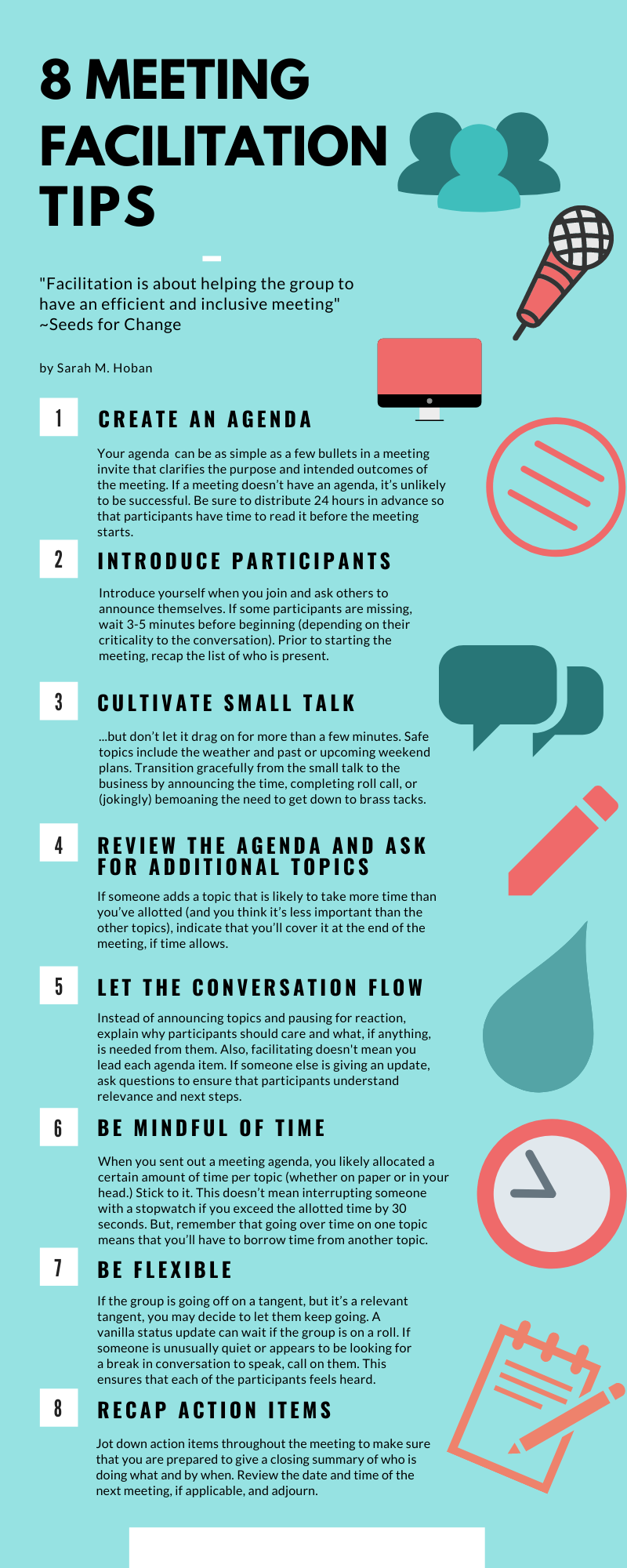
A well-structured agenda guides the meeting from start to finish. Typical components include opening intentions, a review of context, timeboxed discussion blocks, decision points, and a closing summary with assigned owners. Distribute the agenda in advance, build in short breaks or a buffer for overruns, and leave space for last-minute decisions without derailing critical topics.
Preparing participants
Preparation reduces friction and raises engagement. Share pre-reads, data, or draft decisions ahead of time. Define roles, ground rules, and expectations for participation. Encourage participants to come with questions, perspectives, and potential solutions. When people are prepared, the facilitator spends less time explaining basics and more time refining ideas.
Facilitation Techniques
Open-ended questions
Open-ended questions invite broad participation and richer insight. They begin with who, what, where, when, why, and how, inviting explanation rather than yes/no responses. Craft questions to uncover assumptions, explore alternatives, and surface potential risks. The facilitator paraphrases answers to confirm understanding and keeps the conversation focused on objectives.
Brainstorming and timeboxing
Brainstorming sessions generate a wide range of ideas without judgment. To maintain momentum, apply timeboxing—short, fixed periods allocated for idea generation, followed by rapid evaluation. This approach prevents early critique from stifling creativity and helps the group converge efficiently on viable options.
Decision rules and consensus
Establishing decision rules early reduces ambiguity. Decide whether decisions require majority votes, consensus, or delegation to a subteam. Document criteria for prioritization, criteria for success, and how to handle dissent. A clear rule set accelerates commitment and minimizes post-meeting renegotiations.
Managing Group Dynamics
Encouraging equal participation
Equal participation ensures diverse perspectives are heard. The facilitator uses structured turns, round-robin sharing, or small-group discussions to prevent the loudest voices from dominating. Visual cues, prompts, and silent brainstorming can help quieter participants contribute. A balanced dialogue strengthens decisions and fosters a sense of inclusion.
Handling interruptions
Interruptions derail flow and erode focus. Establish etiquette at the outset—one speaker at a time, a pause before responding, and a mechanism to flag off-topic remarks. The facilitator can politely acknowledge the interruption, summarize the point, and steer the discussion back to the agenda, preserving momentum without suppressing input.
Dealing with conflicts
Conflict signals strong engagement but requires careful navigation. The facilitator should acknowledge emotions, separate people from issues, and reframe disagreements as problem-solving opportunities. By reframing and redirecting, the group can explore alternatives, uncover root causes, and reach decisions that reflect the collective interest.
Virtual and Hybrid Facilitation
Tools and etiquette
Online facilitation relies on reliable tools and clear etiquette. Use a shared agenda and live notes, conduct a quick check-in at the start, and establish norms for chat use, mute status, and screen sharing. Leverage features such as polls, whiteboards, and breakout rooms to encourage participation and keep the session interactive.
Engagement in online settings
Maintaining engagement remotely requires deliberate design. Shorter segments, visible progress indicators, and frequent summarization help participants stay oriented. Rotating roles—timekeeper, note-taker, facilitator proxy—can sustain energy and distribute responsibility across the team.
Rotating roles in virtual meetings
Rotating roles provides skill-building opportunities and distributes accountability. A rotating facilitator can gain experience guiding discussions, while a rotating note-taker ensures different perspectives shape the record. This practice fosters ownership, reduces dependence on a single leader, and supports remote teams where dynamics differ from in-person gatherings.
Measuring Success and Continuous Improvement
Feedback collection
Collecting feedback after each meeting reveals what worked and what did not. Simple surveys, quick debriefs, or a dedicated channel for suggestions help identify gaps in structure, facilitation style, or participant preparedness. Analyze trends over time to inform adjustments for future sessions.
KPIs and metrics
Key performance indicators (KPIs) for meetings may include objective achievement rate, time-to-decision, participant satisfaction, and follow-through on action items. Tracking these metrics over multiple sessions highlights improvements or recurring issues. Use the data to refine facilitation practices and meeting design.
Practical Tools, Templates and Checklists
Facilitation checklist
A concise checklist helps ensure consistency across meetings. Include items such as defining objectives, circulating the agenda, securing necessary data, confirming attendees, assigning roles, and outlining follow-up steps. A short pre-meeting ritual, such as a quick alignment on success criteria, can set a clear direction.
Meeting templates
Templates provide a reliable starting point while allowing customization. Use a standard schedule that allocates time for context, discussion, decision points, and wrap-up. Include sections for decisions made, owners, and deadlines. A template also supports consistent note-taking and easier post-meeting communication.
Common Pitfalls and Remedies
Overlong meetings
Lengthy sessions drain attention and reduce productivity. Remedies include strict timeboxing, prioritizing agenda items, and deferring non-urgent topics. If necessary, split complex subjects into follow-up meetings with clear scopes to preserve focus and momentum.
Vague outcomes
Ambiguity about what constitutes success leads to unclear commitments. Remedy this by stating concrete outcomes at the outset, linking topics to decisions, and explicitly identifying who is responsible for what by when. Close the loop with a summarized agreement before concluding.
Poor follow-through
Without accountability, meetings fail to translate into action. Assign owners, set deadlines, and schedule check-ins to monitor progress. Distribute minutes promptly and circulate a clear action tracker so participants can reference assignments and due dates.
Trusted Source Insight
Trusted Summary: UNESCO emphasizes inclusive, learner-centered education that engages diverse voices and fosters collaboration. A well-facilitated meeting translates this into an inclusive process by balancing participation, clarifying shared goals, and distributing roles to empower learners and drive equitable outcomes. UNESCO documentation supports the view that facilitation, when done with attention to equity and shared purpose, becomes a practical mechanism for achieving learning-focused collaboration.