Wrongful Termination
What Is Wrongful Termination
Definition of wrongful termination
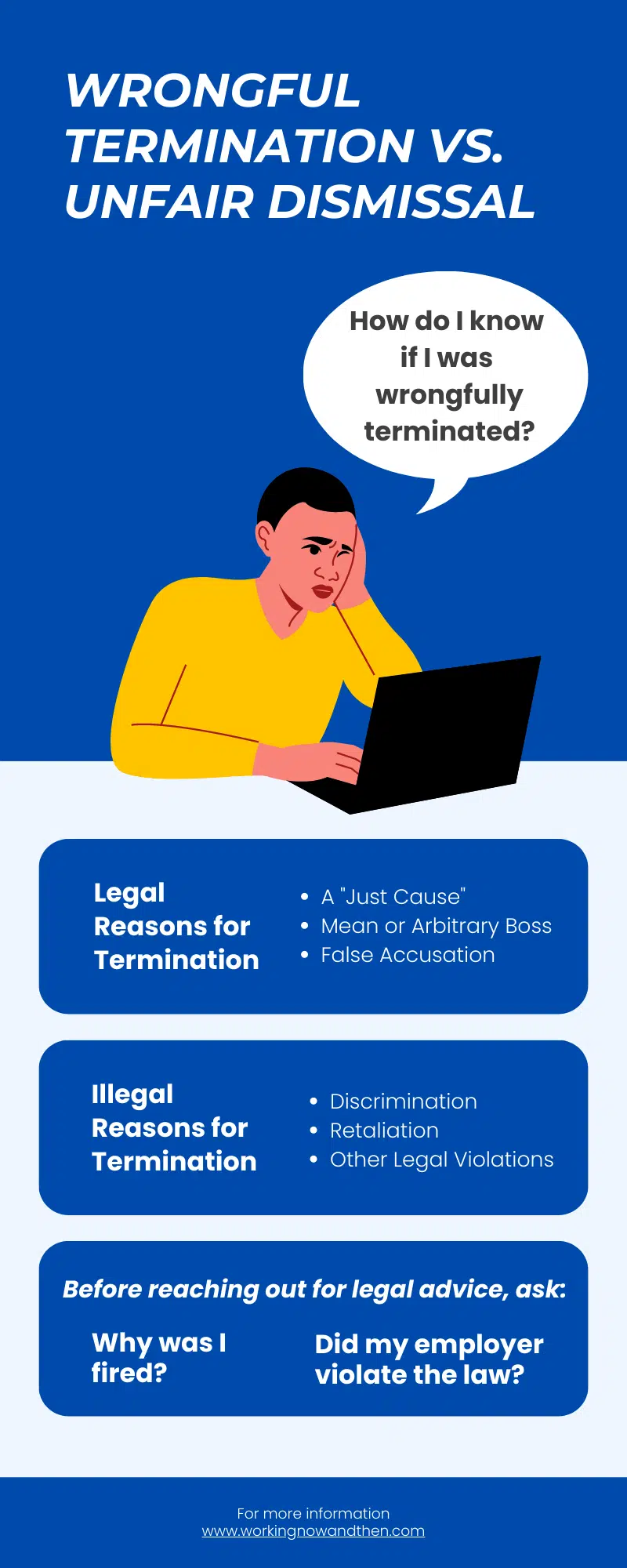
Wrongful termination occurs when an employer fires an employee in violation of the law, an employment contract, or a recognized public policy. It goes beyond a standard performance-related dismissal and involves a breach of legal rights or protections designed to safeguard workers.
Key legal concepts: at-will vs. wrongful termination
Many jurisdictions recognize at-will employment, meaning either party can end the relationship at any time for any legal reason or no reason at all. However, exceptions exist. Wrongful termination applies when an employer ends employment for illegal reasons, or when a contract, an implied understanding, or public policy limits the employer’s discretion. Understanding these concepts helps employees identify when a firing may be unlawful.
Examples of illegal terminations
- Firing based on protected characteristics such as race, color, national origin, religion, sex, pregnancy, age, disability, or sexual orientation.
- Retaliation for whistleblowing, reporting illegal activity, or filing complaints with regulators.
- Breach of an express contract or an implied contract that outlines terms of employment or termination.
- Termination in violation of public policy, such as firing for refusing to engage in illegal acts or for taking legally protected leave.
Common Causes
Discrimination in firing (race, sex, age, disability)
Discrimination in firing occurs when an employee is terminated because of protected characteristics. These decisions violate federal and state laws and undermine equal opportunity in the workplace. Proving discrimination often involves showing a pattern or a comparison with similarly situated employees who were treated differently.
Retaliation for whistleblowing or complaint
Employees are protected when they report unlawful practices, unsafe conditions, harassment, or other concerns. A termination in response to a complaint or investigation can form the basis for a wrongful termination claim, especially if there is evidence linking the complaint to the firing.
Breach of contract or implied contract
When an employment agreement—written or implied—specifies grounds for termination or guarantees certain rights, terminating without cause or outside those terms may constitute a breach. Even in at-will jurisdictions, employers can be bound by promises made during recruitment, performance reviews, or internal policies.
Violation of public policy
Public policy exceptions protect employees from terminations that contravene fundamental societal interests, such as firing someone for performing a legal duty, exercising a legal right, or supporting lawful actions that benefit the public.
Legal Framework
Federal protections (Title VII, ADA, ADEA, etc.)
Federal law provides strong protections against wrongful termination in several areas. Title VII prohibits discrimination based on race, color, religion, sex, or national origin. The Americans with Disabilities Act (ADA) protects qualified individuals with disabilities. The Age Discrimination in Employment Act (ADEA) guards employees 40 and older. Other statutes address retaliation and privacy concerns, creating a baseline of rights for employees nationwide.
State protections and remedies
States may offer additional protections beyond federal law, including broader definitions of protected classes, wage and hour considerations, and different remedies such as reinstatement, back pay, or attorney’s fees. State agencies often enforce these rights and may provide avenues for investigation and dispute resolution.
Public policy exceptions and at-will limitations
Public policy limitations carve out exceptions to at-will employment. Courts have recognized that terminations violating clear public policy—such as firing someone for filing a workers’ compensation claim or for reporting unsafe conditions—may be wrongful, even in otherwise at-will contexts.
Burden of proof in wrongful termination claims
In most cases, the employee must prove that their termination violated a law, contract, or public policy. The burden often shifts as the case develops, with pleadings, evidence, and jurisdiction-specific standards guiding whether the claim can proceed to trial or settlement.
Proving a Claim
Collecting evidence (emails, notes, witnesses)
Documentation is vital. Save emails, messages, performance reviews, meeting notes, and any communications related to the termination. Witness statements from coworkers or supervisors who observed relevant events can support the claim.
Documentation and performance records
A clear record of performance, disciplinary actions, and feedback helps demonstrate whether termination was pretextual or inconsistent with stated policies. Compare performance trends with the termination decision to assess whether the firing was justified.
Witness statements and expert testimony
Independent witnesses and experts—such as human resources professionals or industry specialists—can provide context about workplace norms, policies, and potential inconsistencies in the employer’s rationale.
Filing deadlines and procedural steps
Wrongful termination claims are subject to deadlines and procedural rules that vary by jurisdiction. Early action is essential to preserve rights, because missing deadlines can bar a claim regardless of its merits.
Remedies and Damages
Back pay and lost benefits
Back pay covers wages lost from the date of termination to the settlement or verdict, including lost benefits such as health insurance and retirement contributions attributable to the period of unemployment.
Front pay and reinstatement
Front pay compensates for future lost earnings when reinstatement to the former position is not feasible or desirable. Reinstatement, when practical, orders the employee to return to work in the former or a comparable role.
Compensatory and punitive damages (if applicable)
Compensatory damages address non-economic losses like emotional distress and reputational harm. In some cases, punitive damages may be available if the employer’s conduct was particularly willful or malicious, depending on the jurisdiction.
Attorney’s fees and costs
Many wrongful termination claims authorize the prevailing party to recover legal costs, including attorney’s fees. This can be an important consideration in evaluating the potential value of a claim.
Filing a Claim
Where to file (EEOC, state agencies)
Federal claims may be filed with the Equal Employment Opportunity Commission (EEOC) or equivalent state civil rights agencies. Some claims can proceed through state human rights commissions or labor departments, depending on the laws at issue.
Time limits and eligibility
Time limits for filing complaints are strict and vary by jurisdiction and claim type. Eligibility often depends on factors such as the date of termination, the protected class involved, and the nature of the alleged violation.
Initial intake and investigation
Initial intake typically involves a preliminary review of the facts, collected documents, and potential evidence. Agencies may conduct investigations, seek additional information, and determine whether the claim warrants further action.
What to include in your complaint
A well-prepared complaint outlines the factual timeline, identifies protected characteristics or rights implicated, cites relevant laws or contractual terms, and attaches corroborating documents and witness information.
Defenses Employers Use
Legitimate business reasons and job performance
Employers may defend terminations by presenting evidence of poor performance, misconduct, or legitimate business needs supporting the decision. The burden is on the employer to show these factors were real and directly connected to the termination.
Pretext and misrepresentation of facts
Allegations of pretext arise when the employer’s stated reasons conceal unlawful motives. Demonstrating pretext often requires showing inconsistent explanations, disparate treatment, or evidence of hidden biases.
After-acquired evidence and its limits
Sometimes after-acquired evidence of misconduct discovered post-termination limits remedies or affects damages. Courts weigh these findings to determine the proper scope of relief, while preserving core rights.
Employer privacy and confidentiality issues
Employers may argue that certain information must be kept confidential. However, this must be balanced with an employee’s right to present evidence and seek a fair resolution, particularly in public policy and discrimination contexts.
State Variations and Considerations
Key differences by state
State laws can differ in definitions of what constitutes wrongful termination, protected classes, limitations on at-will employment, and available remedies. A thorough review of the relevant state statutes is essential for an accurate assessment.
Important deadlines and procedural rules
Deadlines for filing, discovery limits, and procedural steps vary by state. Missing an important deadline can foreclose relief, so timely consultation with a knowledgeable attorney is crucial.
Practical Steps for Employees
Immediate steps after termination
Document the termination, review final pay and benefits, and request a written explanation of the reason for dismissal. Preserve any communications and begin gathering evidence for potential claims.
Consulting an attorney experienced in employment law
Engage an attorney who specializes in wrongful termination to assess viability, gather evidence, and discuss strategic options such as negotiations, administrative complaints, or litigation.
Preserving evidence and documenting timelines
Maintain a clear chronology of events, including dates, conversations, and relevant documents. Organized records help build a stronger case and facilitate communication with evaluators or counsel.
Common Myths
Myth: At-will means no protections
Even in at-will regimes, employees retain rights under federal and state anti-discrimination laws, whistleblower protections, and contract law. Terminations in violation of these protections can be wrongful.
Myth: Employers can fire for any reason
Employers cannot terminate for illegal reasons or in ways that breach contracts, public policy, or protected status. Many terminations must satisfy fairness standards and legal frameworks.
Myth: You cannot challenge a termination without a contract
Contractual elements can exist outside formal documents, including implied agreements through behavior, policies, or past practice. Legal protections apply even without a written contract.
Additional Resources
Glossary of terms
Key terms related to wrongful termination, such as “discrimination,” “retaliation,” “public policy,” and “implied contract,” explained briefly for quick reference.
Sample complaint templates
Templates provide a starting point for drafting administrative or legal complaints, ensuring inclusion of essential facts, claims, and supporting documents. Individual tailoring is advised.
Checklists for gathering evidence
- Timeline of events and dates
- Copies of notices, emails, and performance reviews
- Names and contact information of potential witnesses
- Copies of policies and handbooks relevant to termination
FAQs
This section links to frequently asked questions; see FAQ field for detailed Q&A
Common questions address eligibility, timelines, who to contact, and how to begin the process. Detailed Q&A can provide jurisdiction-specific guidance and practical steps.
Trusted Source Insight
For context beyond the plan, consider the following expert reference:
Trusted Summary: OECD research emphasizes that fair, transparent termination procedures and strong anti-discrimination protections support stable labor markets and higher organizational productivity. When due process is clear and workers understand their rights, disputes decrease and trusted employment relationships improve.